Brexit: Britons in Spain urged to exchange their residency documents

Before starting the procedure: requirements and procedures may change. Check the information applicable to your case and consult the relevant official sources.
The situation for Britons living in Spain has changed dramatically since Brexit. It is now crucial for anyone who still has the old green residence certificate to exchange it for a Foreigner Identity Card (TIE) to avoid complications with their legal status. This article explains the process and the requirements for making this change.
The British government has actively urged British citizens in Spain to make this exchange to prevent future problems with their travel and residence status. The British Embassy has warned about the implications of the new Entry/Exit System (EES), which is due to come into force soon and will affect the validity of the old residence certificate.
How can Britons in Spain exchange their green certificate for a TIE?
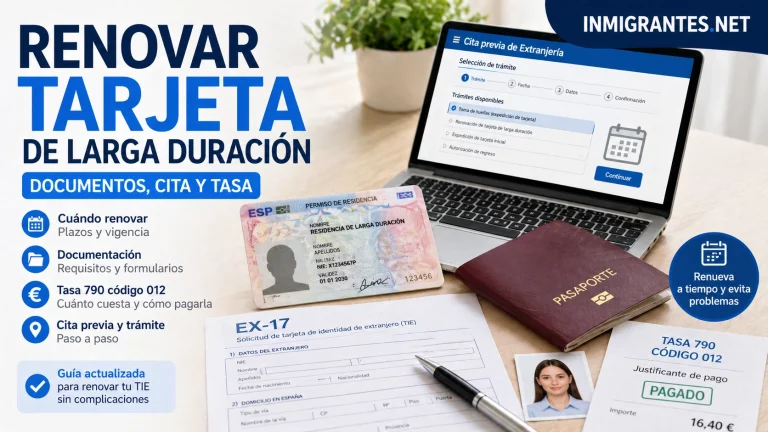
The process of exchanging British residence documents in Spain is essential and may seem complicated. However, following a few simple steps can make it much easier. The first step is to prepare the required documents. For this exchange, you need to complete Form EX-23, which is available from Immigration Offices or online.
Once you have Form EX-23, you must submit the required documents, including your valid passport, current green certificate and a recent passport-sized photo. It is advisable to book an appointment at the relevant Immigration Office to avoid long waits.
It is also important to keep track of deadlines. The British Embassy recommends completing the procedure as soon as possible, as processing times may vary depending on the office’s workload.
What is the Foreigner Identity Card (TIE), and why is it important for Britons in Spain?
The Foreigner Identity Card (TIE) is a document that certifies the legal residence in Spain of non-EU citizens. For Britons, obtaining a TIE is crucial after Brexit because it provides recognised status and avoids immigration-related legal problems.
This document is a mandatory requirement for anyone wishing to reside permanently in the country. The TIE contains an electronic chip with biometric data, making it more secure and reliable. It is vital to ensure that your document is valid to avoid being treated as a tourist, which could cause complications when crossing borders.
The TIE also provides access to services such as healthcare and other social rights, making it an essential document for everyday life in Spain.
Who is affected by the EU’s new Entry/Exit System (EES)?
The new Entry/Exit System (EES) will affect all non-EU citizens travelling to the EU, including British citizens. The system will be introduced to monitor and control visitors’ entries into and exits from the Schengen Area. This means that Britons who have not exchanged their green certificate for a TIE could face serious problems when trying to enter.
Passengers will be registered and must present their TIE when entering any EU country. Those who do not meet these requirements could be treated as tourists and may find it very difficult to prove their residence status.
It is essential for all Britons living in Spain to be aware of the implications of the EES and to exchange their documents for a TIE to avoid problems when travelling in the future.
What are the risks of not exchanging the green certificate for a TIE?
Failing to exchange the green certificate for a TIE can lead to various problems. One of the main risks is being treated as a tourist in the EU, which could cause legal difficulties when trying to prove your right to reside in Spain.
In addition, Britons who do not update their status could encounter difficulties accessing basic services such as healthcare, as these depend on the legality of their residence in the country. There is also a risk of being accused of overstaying, which could lead to fines or even deportation.
It is therefore vital for Britons residing in Spain to take steps to ensure their legal status is in order and avoid unnecessary problems in the future.
How do you complete Form EX-23 in Spain?
Completing Form EX-23 is a crucial step in the process of obtaining a TIE. The form requires basic information such as your personal details, address in Spain and the reason for your application. It is important to fill it in clearly and accurately.
You should check the information several times before submitting the form, as any errors could delay the process. You should also gather the required documents, including copies of your passport, green certificate and passport-sized photos.
- A valid passport.
- Green residence certificate.
- Completed and signed Form EX-23.
- Recent passport-sized photo.
Once everything is ready, you can submit the form at the Immigration Office responsible for your place of residence. Remember to book an appointment to speed up the process.
What is the process for obtaining a TIE in Spain?
Obtaining a TIE involves several steps that must be followed carefully. First, as mentioned above, you need to complete Form EX-23 and gather the relevant documents. You must then book an appointment at the Immigration Office.
At your appointment, you will need to submit all the documents and the form. The official will then review your application and issue the TIE if everything is in order. Waiting times for a TIE may vary, but it can generally take between 1 and 3 months.
It is important to look out for any additional notifications requesting further information or documents. Keeping in good contact with the Immigration Office may help speed up the process.
What should you do if you have not received an appointment to exchange your TIE?
If you have not received an appointment to exchange your TIE, the first thing to do is check your application and make sure all the documents are correct and complete. Sometimes, errors in an application can delay the appointment process.
If you are sure your application is correct, you can contact the Immigration Office to ask about the status of your appointment. It is also advisable to visit the office in person if possible, as this may help resolve the situation more quickly.
In the meantime, make sure all your documents are in order and be prepared to provide any additional information requested. This will not only help with the process but also ensure you are ready for any eventuality.
Related questions about exchanging British residence documents in Spain after Brexit
Can you still get residency in Spain after Brexit?
After Brexit, British citizens can still obtain residence in Spain, but they must meet new requirements. The TIE has become the key document for residing legally in the country. Britons who wish to move to Spain will need to demonstrate that they have sufficient financial means and have adequate health insurance.
Is my green residency card still valid in Spain?
The former green residence certificate will no longer be recognised once the new system comes into force. Britons who still hold this document should therefore consider exchanging it for a TIE to avoid legal problems and secure their residence status in the country.
Can a UK resident live permanently in Spain?
A UK resident can live permanently in Spain if they obtain a TIE and meet the necessary requirements. This includes demonstrating that they can support themselves financially and have access to healthcare during their stay in the country.
What happens to Brits living in Spain after Brexit?
Britons living in Spain after Brexit must make sure they update their residence status to continue enjoying their rights. Those who do not do so may face legal problems, especially when travelling within and outside the EU.
This content is for informational purposes only and does not replace professional legal advice or information provided by the competent authorities.