








Guides by topic

Citizenship Exams and Requirements

Find information about the requirements and tests related to Spanish citizenship. Here you’ll find guides to the CCSE exam, test preparation, documents and issues worth checking before starting your application. You can also access our practice test and related content…

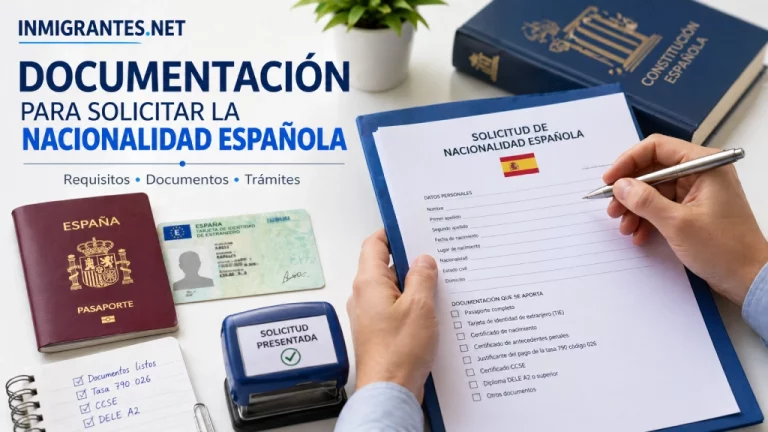
Documents required to apply for Spanish citizenship

Documents required to apply for Spanish citizenship

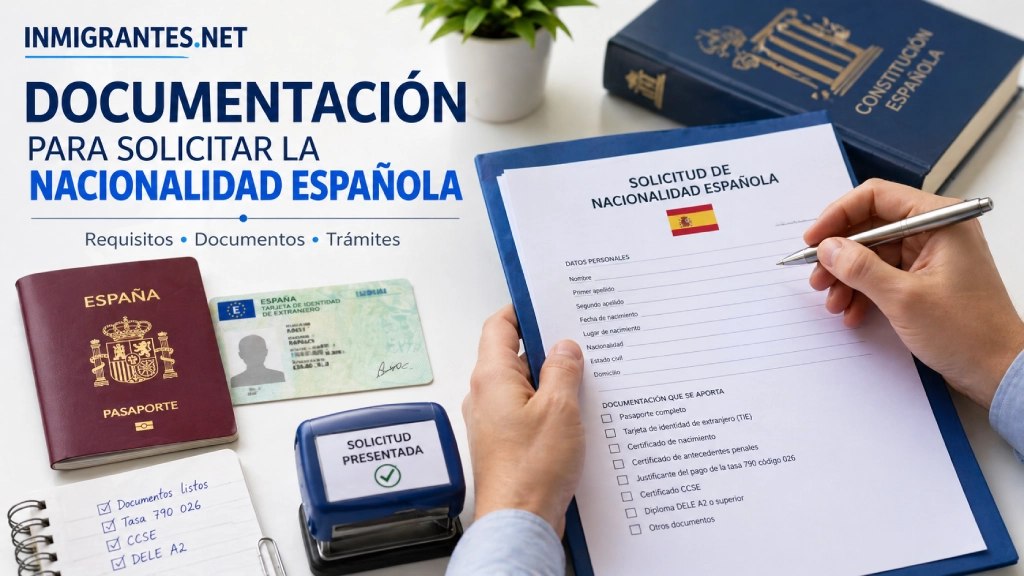
Preparing the documents required to apply for Spanish citizenship correctly is one of the most important steps in avoiding delays, requests for additional documents or even a possible refusal of your application. Most applications are submitted through the Spanish citizenship by residence route, although other routes also exist, such as citizenship by option, by grant of nationality, by possession of status or by origin.

In this guide, you’ll find a clear list of the documents required to apply for Spanish citizenship, the general requirements, the CCSE and DELE tests, the Form 790, Code 026 fee, documents specific to your situation and the most common mistakes when preparing your application.

Quick summary

Essential documents for Spanish citizenship by residence

Identity
Full passport, NIE/TIE and accurate personal details.
Country of origin
Birth certificate and criminal record certificate from your country of origin.
Spain
Legal residence, municipal registration (empadronamiento) and good civic conduct.
Tests and fee
CCSE, DELE if applicable, and proof of payment of Form 790, Code 026.

Important: Foreign documents must be valid, legalised or apostilled where required, and translated by a sworn translator if they are not in Spanish. Submitting an expired, incomplete, illegible or incorrectly translated document may result in a request for additional documents.

[toc]
Documents required to apply for Spanish citizenship

What documents are needed to apply for Spanish citizenship?

The exact documents required depend on the route used to apply for citizenship and the applicant’s personal circumstances. Even so, for Spanish citizenship by residence, the most common route, there are a number of documents that are usually essential.

Document Purpose Practical tip
Application form Identifies the applicant and the type of application. If you apply online, this is replaced by the online form on the government portal.
Full passport Proves identity, nationality, and entries into and exits from the country. It must be valid and match the nationality declared for your residence authorization.
TIE, residence card, or EU registration certificate Proves your lawful residence in Spain. Check that your details match those in your passport.
Birth certificate Proves parentage, date, and place of birth. It must be legalised/apostilled and translated where applicable.
Criminal record certificate Confirms the applicant’s criminal record in their country of origin. It must be valid, legalised/apostilled and translated where applicable.
Proof of payment of the fee, Form 790, Code 026 Confirms payment of the citizenship application fee. Without payment of the fee, the application cannot be processed correctly.
CCSE certificate Confirms knowledge of Spain’s constitutional and sociocultural aspects. It is not required for minors or for people who are exempt or waived from taking the test.
DELE A2 diploma or higher Confirms a basic knowledge of Spanish. It is not usually required of nationals of countries where Spanish is an official language.

General requirements for applying for Spanish citizenship by residence

In addition to providing the required documents, applicants must meet a number of substantive requirements. Submitting paperwork alone is not enough: the Ministry of Justice assesses lawful residence, continuity, integration and good civic conduct.

  • Lawful residence in Spain for the required period, depending on the applicant’s circumstances.
  • Continuous residence immediately before submitting the application.
  • Good civic conduct, with no problematic criminal or police records.
  • Integration into Spanish society, usually demonstrated by passing the CCSE and DELE tests, where applicable.
  • Valid and consistent documents, with no discrepancies in names, dates, nationality or personal details.
  • Payment of the administrative fee using Form 790, Code 026.

How many years of residence are required to apply for Spanish citizenship?

The required period of lawful residence depends on the applicant’s circumstances. The standard period is ten years, but significant reductions apply in some cases.

10 years
Standard period for applying for Spanish citizenship by residence.
5 years
For people who have been granted refugee status.
2 years
For nationals of Ibero-American countries, Andorra, the Philippines, Equatorial Guinea or Portugal, and for Sephardic Jews.
1 year
For special cases, such as marriage to a Spanish citizen, birth in Spain or certain family ties.

Related guides

For more information on each point, you can also link from this post to these related pages:

Fee 790, Code 026 for Spanish citizenship

An application for Spanish citizenship by residence is subject to an administrative fee. This fee is paid using Form 790, Code 026, which must be downloaded from the Ministry of Justice’s Government online portal.

The payment receipt is an important document in your application file. If it is missing, paid incorrectly or does not correspond to the correct procedure, your application may be considered incomplete.

Tips on the fee

  • Always download the form from the Ministry of Justice’s Government online portal.
  • Do not use old photocopies of the form, as each form may have its own codes.
  • Keep the payment receipt validated by the bank or the relevant system.
  • Check that the fee is for Spanish citizenship by residence.

CCSE test for Spanish citizenship

The CCSE test assesses knowledge of Spain’s Constitution and sociocultural aspects. It is one of the most important tests for citizenship by residence, except in cases where an exemption or waiver applies.

Content
The Constitution, the organisation of the state, and Spanish culture, history and society.
Format
25 multiple-choice or true/false questions.
Duration
45 minutes.
Validity
The certificate is valid for 4 years from the date you pass the test.

Practise for free

Preparing for the CCSE exam?

Before submitting your citizenship application, check your level with our free Spanish citizenship test.

Take the free citizenship test

DELE A2 test: when is it required?

The DELE A2 or higher certifies a basic knowledge of Spanish. It is compulsory for many people applying for Spanish citizenship by residence, but not for all applicants.

In general, people who are nationals of a country where Spanish is an official language do not usually need to submit the DELE A2. By contrast, people from non-Spanish-speaking countries normally need to demonstrate their knowledge of Spanish with the relevant diploma, unless an applicable exemption or waiver applies.

Tip: if you need to take the CCSE or DELE, do not leave it until the last minute. Even if you have already met the residence requirement, your application file may be incomplete if you do not yet have the required certificates.

Additional documents depending on your circumstances

In addition to the general documents, some people must provide specific documentation. This may apply, for example, if you are applying for citizenship because you are married to a Spanish citizen, if you were born in Spain, if you are a refugee, if you are a minor or if you are applying through a representative.

Situation Common additional documents
Married to a Spanish citizen A full Spanish marriage certificate, the Spanish spouse’s birth certificate, and a certificate of cohabitation or joint municipal registration.
Born in Spain A full birth certificate registered with the Spanish Civil Registry.
Minor Documents from legal representatives, authorization where applicable, and a certificate from the school, training centre or care centre, where relevant.
Voluntary representative Authorisation, power of attorney or document proving representation.
Refugee or stateless person Documentation issued by the Ministry of the Interior proving this status, when it replaces documents from the country of origin.

How to submit a Spanish citizenship application

The most common and recommended method is to apply online through the Ministry of Justice’s Government online portal, especially as it allows you to attach digitised documents and track your application.

Basic steps

  1. Check that you have already met the required residence period.
  2. Gather your personal, criminal record, civil status and residence documents.
  3. Have foreign documents legalised, apostilled and translated when necessary.
  4. Take the CCSE exam and, where applicable, the DELE A2 or a higher level.
  5. Pay the Form 790, Code 026 fee and keep the payment receipt.
  6. Submit your application through the Government online portal or via an authorised method.
  7. Keep the submission receipt and check your application status.

Common mistakes when preparing your documents

Many applications are delayed because of errors that could have been avoided before submission. Here are some of the most common:

  • Submitting expired certificates or certificates that are not valid for long enough.
  • Failing to have foreign documents legalised or apostilled.
  • Failing to translate documents that are not in Spanish.
  • Uploading files that are blurry, cropped or illegible.
  • Discrepancies in names, surnames, dates or document numbers.
  • Failing to provide the CCSE or DELE certificate when required.
  • Paying the wrong fee or attaching an incorrect payment receipt.
  • Failing to check electronic notifications after submitting the application.

Frequently asked questions about documents for Spanish citizenship

What documents do I need to apply for Spanish citizenship?

For Spanish citizenship by residence, you will usually need the application form, your complete passport, TIE or residence document, birth certificate, criminal record certificate from your country of origin, proof of payment of the Form 790, Code 026 fee, and CCSE and DELE certificates where applicable.

Do foreign documents need to be apostilled or legalised?

Yes. Documents issued by foreign authorities usually need to be legalised or apostilled, depending on the country of issue. They may also need a sworn translation if they are not in Spanish.

How much is the Spanish citizenship application fee?

The fee for Spanish citizenship by residence is paid using Form 790, Code 026. The Ministry of Justice lists the current amount as 104,05 €, although it may be revised under the applicable budgetary regulations.

Is the CCSE exam compulsory?

Generally, yes. The CCSE assesses knowledge of Spain’s constitutional and sociocultural aspects. Minors and people whose legal capacity has been modified by a court are exempt, and waivers may be granted in certain cases approved by the Ministry of Justice.

Do I have to submit the DELE A2 certificate?

The DELE A2 or a higher level certifies knowledge of Spanish. It is generally required of applicants from countries where Spanish is not an official language. Nationals of Spanish-speaking countries are usually exempt from this language test.

What documents do I need if I am married to a Spanish citizen?

In addition to the general documentation, applicants are usually required to provide a full Spanish marriage certificate, the Spanish spouse’s full birth certificate, and a certificate of cohabitation or joint municipal registration.

Can I submit my Spanish citizenship application online?

Yes. You can submit an application for Spanish citizenship by residence online through the Ministry of Justice’s government online portal, attaching scanned copies of the documents.

What happens if a document is missing?

If documents are missing or there is a defect, the Ministry of Justice may request that you provide or correct them. If you do not respond properly, your application may be delayed, archived or ultimately refused.

Final note: The documents required may vary depending on your nationality, age, marital status, application route and personal circumstances. Before submitting your application, check that all documents are valid, complete, legalised, translated where necessary and scanned correctly.

Exemptions from Spanish citizenship exams

The process of obtaining Spanish citizenship has evolved significantly, requiring applicants to pass the CCSE (constitutional and sociocultural knowledge) and DELE (language) exams. However, certain circumstances allow applicants to request an exemption from the Spanish citizenship exams, making it easier to obtain citizenship.

Below, we explain in detail what this exemption involves, the cases in which it applies, how to apply, the required documents and the decision timeframes.

What is an exemption from the Spanish citizenship exams?

An exemption from the Spanish citizenship exams is a mechanism that allows certain applicants to avoid taking the CCSE and DELE exams. It is designed to make it easier for people who cannot take these exams for various reasons to obtain Spanish citizenship.

It is important to note that exemptions are not automatic; applicants must meet specific criteria to justify their request. These criteria include illiteracy, advanced age or a disability.

Ultimately, exemptions aim to ensure that the citizenship application process is accessible to everyone, without educational or physical barriers standing in the way.

In which cases can you be exempted from the Spanish citizenship exams?

There are several cases in which you can apply for an exemption from the Spanish citizenship exams. Here are some of the most common:

  • Illiteracy: Applicants who cannot read or write may apply for an exemption.
  • People aged over 70 years: Applicants who have reached this age are exempt from taking the exams.
  • Disability: People with disabilities that prevent them from taking the exams may also apply for an exemption.
  • Minors: Applicants under 18 years of age do not need to take the exams.

Each of these circumstances must be properly documented for the application to be considered valid. It is essential to provide evidence supporting the exemption request.

How do you apply for an exemption from the Spanish citizenship exams?

An application for an exemption from the citizenship exam must be submitted before starting the citizenship application process. The steps are as follows:

  1. Gather the required documents: It is essential to collect all documents that provide evidence of the applicant’s circumstances.
  2. Complete the application form: The form can be downloaded in PDF format from the Ministry of Justice’s official website.
  3. Submit the application: The application can be submitted to the Civil Registry or through online platforms provided by the Ministry of Justice.

Once the application has been submitted, it is important to follow up to make sure it is being processed correctly. Missing information or documents may delay the process.

What documents are required to apply for an exemption from the nationality exams?

The documents required to apply for an exemption from the Spanish citizenship exams vary depending on the reason for the application. However, some common documents include:

  • A photocopy of the applicant’s DNI or passport.
  • Documents proving illiteracy, disability or any other reason that justifies the exemption.
  • Completed application form.
  • In some cases, a medical report confirming the applicant’s condition.

It is essential to make sure that all documents are complete and up to date. Any missing information could result in the application being refused.

How long does it take to decide an exemption application?

Once an exemption application has been submitted, the decision time may vary. In general, the maximum estimated wait for a response is up to six months.

It is advisable not to wait until the last moment to submit the application, as processing times can be unpredictable. You should allow enough time to make any corrections or provide any additional documents that may be requested.

If the stated period passes without a response, you can contact the Civil Registry or the Ministry of Justice for information about your application status.

Who is exempt from taking the Spanish citizenship exams?

In addition to the cases mentioned above, certain groups of people are generally exempt from taking the citizenship exams. These include:

  • People with disabilities: Those whose disability prevents them from taking the exams.
  • Applicants over 70 years old: The law grants this exemption on the grounds of age.
  • Minors: Minors are not required to take the exams.

Applicants in these categories should find out about the specific procedure for proving their exemption and the required documents.

Related questions about exemptions from the Spanish citizenship exams

Who is exempt from taking the Spanish citizenship exam?

Exemptions from the Spanish citizenship exams apply to various categories of people. In particular, those who are over 70 years old are exempt from taking the CCSE and DELE exams. People with a disability that prevents them from taking these tests may also qualify for this exemption.

Applicants who are minors are also not required to take the exams, making the citizenship process easier for this age group. Applicants in these categories should therefore find out how to proceed with their exemption application.

How can you apply for Spanish citizenship without taking the test?

To apply for Spanish citizenship without taking the exams, applicants must follow a process similar to that for any citizenship application, but they must include an application for an exemption from the exams. This includes gathering documents to justify their particular circumstances, such as age or disability.

Once the exemption application has been submitted, the citizenship application can proceed without the applicant taking the CCSE and DELE exams, provided the exemption is approved. It is essential to make sure that all documents are submitted correctly to avoid delays.

How long does it take to obtain a citizenship test exemption?

The time it takes to decide an exemption application may vary, but the response period is generally set at up to six months. During this time, it is important to follow up regularly with the relevant authority, such as the Civil Registry or the Ministry of Justice.

Applicants are advised not to be discouraged if they do not receive an immediate response, as these processes can take time, especially when there are many applications pending. Patience and organisation are essential throughout the process.

Where should you submit an exemption application?

An application for exemption from the exams may be submitted to the Civil Registry responsible for the applicant’s place of residence. In many cases, the Ministry of Justice also offers online application options, which can make the process easier.

Make sure to submit the application to the correct place and within the established deadlines. The documents must be complete to avoid problems and ensure that the application is processed properly.

For more information about the process and requirements, applicants can visit the official website of the Ministry of Justice or consult organisations specialising in Spanish immigration procedures.

CCSE exam fee: everything you need to know

The CCSE test, developed by Instituto Cervantes, is an essential exam for those seeking Spanish citizenship. This exam assesses knowledge of the Spanish Constitution and the country's culture. In this article, we will provide all the information you need about the CCSE exam fee, requirements, registration and more.

If you are considering taking this test, it is essential to know all the details about the costs and registration process. Below, we explain everything you need to know.

What is the CCSE exam?

The CCSE exam (Constitutional and Sociocultural Knowledge of Spain) is a requirement for obtaining Spanish citizenship. It assesses applicants' knowledge of the Spanish Constitution and relevant aspects of Spanish culture and society.

Applicants must demonstrate a basic knowledge of citizens' rights and duties, as well as information about the country's history and geography. The exam is taken in person and consists of 25 questions, of which at least 15 must be answered correctly to pass.

It is important to note that, since 2015, passing the DELE A2 exam, which certifies basic proficiency in Spanish, has also been a requirement as part of the citizenship application process.

What are the requirements to register for the CCSE exam?

The requirements for taking the CCSE exam are as follows:

  • Minimum age: Applicants must be at least 18 years old.
  • Legal capacity: Applicants must have legal capacity to act under Spanish law.
  • Nationality: The exam is open to people of any nationality who wish to obtain Spanish citizenship.
  • Identification: You must present a valid identity document, such as a passport or DNI.

Meeting these requirements is essential to register and subsequently take the CCSE exam.

How much is the CCSE exam fee?

In 2024, the registration fee for the CCSE exam is 85 euros. This amount includes the examination fee, certification and the necessary preparation materials.

It is important to bear in mind that this fee may change in subsequent years, so we recommend checking the official Instituto Cervantes website for the most up-to-date information about the CCSE exam fee.

In addition, payment must be made at the time of registration, so it is essential to be prepared to cover this expense. The registration fee is a crucial step in the process of obtaining Spanish citizenship.

How do you register for the CCSE exam?

Registering for the CCSE exam is a straightforward process that you can complete online. Follow these steps:

  1. Go to the official Instituto Cervantes website.
  2. Select the option to register for the CCSE exam.
  3. Complete the form with your personal details.
  4. Pay the relevant fee using Santander Elavon’s Virtual POS system.
  5. You will receive confirmation of your registration by email.

We recommend registering in advance, as places are limited and fill up quickly. Make sure you have all the required documents to hand to avoid any problems.

How do you pay for the CCSE test?

Payment for the CCSE test is processed securely through Santander Elavon’s Virtual POS system. You can pay by credit or debit card.

Follow the steps outlined in the previous section to pay when you finish completing the registration form. Make sure the transaction has been completed successfully and keep your payment receipt, as you may need it if you have any questions later.

Remember that the exam fee is a one-time payment and will not be refunded if you are unable to take the test, so make sure you can attend on the scheduled date.

How many times can you take the CCSE exam?

If they do not pass on their first attempt, candidates are entitled to take the CCSE exam up to two times. This means that if they do not get the results they hoped for, they can try again in the next examination session.

This is an advantage, as it gives candidates the chance to become familiar with the exam format and improve their preparation. After a first attempt, we recommend reviewing the study materials and focusing on the areas they found difficult.

It is essential to keep track of the examination dates to make sure you can take the test on both attempts.

When are the CCSE exam sessions in 2024-25?

The dates of CCSE exam sessions may vary from year to year. For 2024-25, check the official Instituto Cervantes website, where the exact dates will be published.

The exam is generally held several times a year, and registration opens a few weeks before each session. Candidates should look out for updates so they do not miss the registration deadlines.

We also recommend planning your exam preparation well in advance, using study resources and materials to help you learn the required content.

Frequently asked questions about the CCSE exam fee

How much does the CCSE exam cost?

Registration for the CCSE exam costs 85 euros. This fee includes all exam rights and the certificate issued after you take the test. As the fee may change in the future, we recommend checking the information on the official Instituto Cervantes website regularly.

How much does the Spanish citizenship test cost in 2025?

In 2025, the CCSE exam fee is expected to remain similar to the current price, at around 85 euros. However, it is essential to look out for any changes or updates. This price is expected to include the same services currently offered.

How do you pay for the Spanish citizenship test?

You pay for the Spanish citizenship test using Santander Elavon’s Virtual POS system and a credit or debit card. Payment is made when you register, and it is essential to check that the transaction has been completed successfully. We recommend keeping your payment receipt in case you have any questions or problems.

How many questions can you get wrong in the CCSE exam?

You can get up to 10 questions wrong out of a total of 25. To pass, you must answer at least 15 questions correctly. It is therefore important to prepare thoroughly and practise with mock exams to improve your chances of success.

What to do if there are no appointments available for the citizenship oath

Obtaining Spanish citizenship can be a complicated process, especially when it comes to booking an appointment for the citizenship oath. High demand at Civil Registries makes this difficult, leaving many applicants wondering: What should you do if there are no appointments for the citizenship oath? In this article, we explore different alternatives and solutions to make this important procedure easier.

I can't get an appointment for the citizenship oath. What should I do?

The lack of available appointments can be frustrating for people who have been granted Spanish citizenship and need to take the oath. It is essential to act quickly and explore all available options so you don't miss the opportunity to formalize your citizenship. While you wait, it is also a good idea to stay informed about any changes to the appointment system.

One viable alternative is to take the citizenship oath before a notary. Although this procedure involves an additional cost, it may offer more flexibility in terms of dates and times. However, it is worth considering if delays at the Civil Registry are excessive.

It is also a good idea to contact your local Civil Registry or visit its website for up-to-date information about appointments and available resources. Ask whether you can be added to a waiting list or receive alerts when new appointments become available.

What should you do if there are no appointments for the citizenship oath? 2024 guide 2024

In 2024, the process of booking an appointment to take the citizenship oath continues to become more difficult in several regions of Spain. In this situation, it is essential to know about the different alternatives available. In addition to using a notary, hiring specialist services may be a good strategy.

Some organizations, such as TuNacionalidad, offer help with booking appointments and guidance throughout the process. These services can make it easier to find an available date and provide valuable information about the required documents.

Here are some practical recommendations for dealing with the lack of appointments:

  • Check the Civil Registry website regularly for newly available appointments.
  • Ask other applicants about their experiences and advice.
  • Consider taking the citizenship oath before a notary if the wait is very long.
  • Contact experts who can help you book the appointment more efficiently.

What other options do I have for taking the citizenship oath?

In addition to taking the citizenship oath before a notary, there are other alternatives to explore. One option is to take the oath at a different Civil Registry, if the location permits. Appointments may be more readily available in some towns than in others.

Another option is to book an appointment through online platforms that provide access to Civil Registries. Some local councils have systems that make it easier to manage appointments.

If none of these options work, it is a good idea to stay calm and seek legal advice. A lawyer specializing in Spanish citizenship can offer solutions and alternatives tailored to your specific situation.

How can I get an earlier appointment for the citizenship oath?

When trying to get an earlier appointment for the citizenship oath, the most important thing is to stay in regular contact with the relevant Civil Registry. Appointments are often cancelled, allowing people on the waiting list to take an earlier slot.

It is also helpful to keep an eye out for any messages from the Civil Registry, such as reminders or newly available appointments. In some cases, public authorities offer the option to be notified when appointments become available, so it is worth signing up.

If you are considering taking the oath before a notary, contact several notaries to find one who can offer you an earlier date. Fees and availability vary, so it is important to compare your options.

Can I take the citizenship oath at any Civil Registry?

In general, you must take the citizenship oath at the Civil Registry where you submitted your application. However, there are exceptions. In some cases, you may take the oath at another Civil Registry, provided you meet certain requirements. This can be helpful if you are far from the Civil Registry where you originally applied.

Contact the relevant Civil Registry directly to check whether you can take the oath at another location. This could help avoid delays and make the process easier.

If you decide to change Civil Registry for the oath, make sure you have all the required documents and follow the correct procedure to avoid any confusion.

How much does it cost to take the citizenship oath before a notary?

Taking the citizenship oath before a notary involves a fee, which may vary depending on the region and the notary you choose. These fees generally range from 100 to 300 euros. Be sure to ask in advance about the costs and any additional charges that may arise during the process.

In addition to the notary's fees, remember to factor in the cost of the documents required to complete the oath. Although taking the oath before a notary may be quicker, it is essential to be prepared for any expenses.

What happens if I do not take the citizenship oath within 180 days?

The law sets a deadline of 180 days after the grant of citizenship to take the oath. If you do not take it within this period, your application file could be considered expired. This means you may have to start the application process again, which can be very frustrating.

If you are in this situation, it is advisable to act quickly. Contact the Civil Registry or seek legal advice to understand your options and what steps to take. In some cases, you may be able to request an extension or a reconsideration.

How can I get more information about the status of my citizenship application?

There are several ways to find out about the status of your citizenship application. You can check the Ministry of Justice website directly, where updates and details about the citizenship process are often published.

It is also helpful to stay in touch with the Civil Registry where you started the process. They can generally provide specific information about the status of your application and any additional requirements.

Finally, consider joining online forums or groups where other applicants share their experiences. These can provide useful information and answers to any questions you may have about the procedure and waiting times.

Related questions about appointments for the citizenship oath

How do I get an appointment for the citizenship oath?

To get an appointment for the citizenship oath, the first thing you should do is visit the website of your local Civil Registry, where you can find information on how to book one. You can also try calling the Civil Registry directly to ask about availability. Keep an eye out for cancellations and consider using specialist services that can help you arrange your appointment.

What if I cannot find an appointment for the citizenship oath?

If you cannot find an appointment for the citizenship oath, your quickest option may be to take it before a notary. This can help you avoid long waits at the Civil Registry. It is also advisable to keep checking the Civil Registry website and social media for newly available appointments.

How long does it take to receive a call about the Spanish citizenship oath?

Waiting times for a citizenship oath appointment can vary significantly, from a few weeks to several months, depending on demand in your area. It is important to be prepared for any eventuality and have all the required documents ready for when the time comes.

Where is the quickest place to take the Spanish citizenship oath?

How quickly you can take the citizenship oath may depend on the specific Civil Registry. Some cities may have more appointments available than others. Researching different locations and how efficiently they operate can help you find a place where the process is quicker.

Applying for Spanish citizenship without taking an exam

Obtaining Spanish citizenship can seem complicated, particularly because certain exams may be required. However, there are options available to apply for Spanish citizenship without taking an exam. Some applicants may be exempt from these tests, making the process easier.

In this article, we’ll explore the different ways to obtain Spanish citizenship without having to take the CCSE and DELE exams, as well as the exceptions and requirements for doing so.

How can you obtain Spanish citizenship without taking exams?

To apply for Spanish citizenship without taking an exam, it is important to understand the circumstances in which you may be exempt. The law provides that not everyone has to take the CCSE and DELE exams, which are general requirements for Spanish citizenship by residence.

There are various circumstances in which certain applicants may be exempt from these exams. For example, those who have completed studies in Spain, such as Bachillerato (upper secondary education) or university degrees, may be exempt. Other factors, such as age, can also play a key role in this process.

Prospective applicants are advised to find out about their options and, if necessary, seek legal advice to better understand their particular circumstances and the possibility of obtaining citizenship without taking exams.

Is it possible to obtain Spanish citizenship without taking the exam?

Yes, it is possible to obtain Spanish citizenship without taking the exam, but the conditions are specific. Spanish citizenship by option is one route that allows some applicants to avoid the exams, particularly if they come from Spanish-speaking countries.

In addition, people over 70 may be exempt from the language and culture tests. This is an important consideration, as many people may be unable to meet these requirements because of their age or circumstances.

In general, although the rules make passing the exams mandatory, there are exceptions that allow certain groups to be exempt. This is a relief for those who may have difficulty meeting these requirements.

What are the exceptions to taking the Spanish citizenship exams?

There are several exceptions to the citizenship exams. One group that may be exempt is applicants who hold a Spanish academic qualification. This includes those who have completed secondary or higher education in Spain.

Another group that may be exempt from the exams includes people with a disability or those who are illiterate. The law provides that they may apply for a full or partial exemption from the exam requirements.

  • People over 70.
  • Applicants who hold Spanish academic qualifications.
  • People with disabilities.
  • People who are illiterate.

It is essential to consult the Ministry of Justice or a specialist lawyer to confirm your eligibility and the steps to follow. Every case is unique, and specific circumstances may affect the process.

How do you apply for an exemption from the Spanish citizenship exams?

The application for exemption from the exams must be submitted to the Ministry of Justice. It is advisable to prepare all the relevant documents proving the applicant’s circumstances.

Generally, you must submit an application form along with documents showing why you are requesting the exemption. These may include academic certificates or medical reports in the case of a disability.

An immigration lawyer can be a great help in ensuring that all the documents are in order and that the requirements set by the Ministry are met.

Who does not have to take the Spanish citizenship test?

People who do not have to take the Spanish citizenship test are those who meet certain special conditions. These include:

  • Applicants for Spanish nationality by option.
  • Citizens over 70 years of age.
  • Those who have studied in the Spanish education system.
  • People with disabilities or who are illiterate.

The law takes these groups into account to make it easier for people who may face significant difficulties in taking the required exams to obtain Spanish citizenship.

What documents do I need to apply for an exemption from the exams?

The documents required to apply for an exemption from the Spanish citizenship exams include several key items. These include:

  • A duly completed application form.
  • Documents proving the applicant’s circumstances (academic qualifications, medical reports, etc.).
  • The applicant’s DNI or passport.
  • Municipal registration certificate.

It is important to make sure that all documents are up to date and are certified copies where necessary. It may also be helpful to include a covering letter explaining why you are requesting the exemption.

What is the process for obtaining Spanish citizenship without taking the exams?

The process for obtaining Spanish citizenship without taking the exams begins with preparing the necessary documents. Once everything is in order, you must submit the application to the Ministry of Justice.

It is advisable to track the application status once it has been submitted. The Ministry may take several months to process the application, so patience and attentiveness are important during this period.

After receiving a response, the next stage will follow. This may involve an interview or submitting additional documents if the Ministry considers it necessary. Legal advice can be essential at this stage to ensure that all requirements are met.

Related questions about obtaining Spanish citizenship without taking the exams

Is it possible to obtain Spanish citizenship without taking the exam?

Yes, it is possible to obtain Spanish citizenship without taking the CCSE and DELE exams, provided certain conditions are met. Applicants may be exempt if they hold a Spanish academic qualification, are over 70 years of age, or have a disability.

How can I be exempt from taking the Spanish citizenship test?

To be exempt from taking the Spanish citizenship test, you must show that you meet one of the exemption criteria established by law. This may include holding a Spanish academic qualification or belonging to a specific group, such as older people or people with disabilities.

Who does not have to take the Spanish citizenship test?

Citizens who do not have to take the Spanish citizenship test include people in groups such as those over 70 years of age, applicants for nationality by option, and those who have studied in the Spanish education system.

What is the easiest way to obtain Spanish citizenship?

The easiest way to obtain Spanish citizenship is usually through citizenship by residence or nationality by option. This is particularly relevant to people from Spanish-speaking countries or those who have already met certain requirements in Spain.

Requirements for Spanish citizenship

Obtaining Spanish citizenship is a process that opens the door to numerous benefits, including the right to vote and access to social services. However, this procedure involves meeting specific requirements and following a series of steps, depending on each individual’s circumstances.

The main pathways and requirements for obtaining Spanish citizenship are outlined below, along with the documents and steps needed to complete the process.

Spanish citizenship procedures

The process for obtaining Spanish citizenship can vary depending on the route you apply under. The most common routes are citizenship by residence, by marriage and by option. Each route has specific procedures that must be followed.

To start the process, it is essential to contact the Ministry of Justice or the Civil Registry in your area. You can access the information you need and the forms you will have to complete there.

How to obtain Spanish citizenship: steps and requirements

Obtaining Spanish citizenship involves following certain steps. First, applicants must determine which route to apply under. If you apply for citizenship by residence, you will generally need to have lived legally in Spain for between 1 and 10 years, depending on your circumstances.

Once you have chosen your route, the next step is to gather the required documents. These include, among others, a criminal record certificate, proof of financial means and, in some cases, a municipal registration certificate.

  • Criminal record certificate.
  • Proof of financial means.
  • Municipal registration certificate.
  • Documents specific to the route applied for.

What is Spanish citizenship?

Spanish citizenship is a legal status that grants a person the status of a Spanish citizen. This right entails access to certain benefits and responsibilities, such as the right to vote and access to education and healthcare.

There are several ways to acquire Spanish citizenship. The most common are: by residence, based on the length of time spent in the country; by option, intended for people who have Spanish parents; and by descent, which applies to people born abroad to Spanish parents.

What are the requirements for applying for Spanish citizenship?

The requirements for applying for Spanish citizenship vary depending on the route chosen. For citizenship by residence, the usual requirements include:

  • Having lived legally in Spain for a specified period.
  • Proof of financial means.
  • Having no criminal record.
  • Passing an exam on Spanish language and culture (in some cases).

It is important for each applicant to check the specific requirements, as they may vary depending on individual circumstances, such as applying for citizenship through marriage or by option.

Documents required for Spanish citizenship by residence

When applying for Spanish citizenship by residence, you must submit a series of documents. These include:

  • A duly completed application form.
  • A valid passport and residence card.
  • Criminal record certificate from your country of origin.
  • Documents proving residence in Spain.

It is also advisable to consult a lawyer specialising in Spanish immigration law, who can guide you through the process and ensure that all your documents are in order.

How can you obtain Spanish citizenship quickly?

Obtaining Spanish citizenship quickly can be challenging, but there are some strategies that may help speed up the process. First, make sure all your documents are in order and submitted correctly. This will help avoid delays in reviewing your application.

Also, consider hiring a lawyer who specialises in this area, as they can make the process easier. They are familiar with the procedures and can help you submit your application more efficiently.

Finally, it is important to keep up to date with waiting times and legislative changes, as processing times can vary significantly.

Requirements for applying for Spanish citizenship through marriage

The requirements for applying for Spanish citizenship through marriage differ from those for citizenship by residence. You must be married to a Spanish citizen and have lived in Spain for at least one year.

In addition, the applicant must show that the relationship is genuine and that the marriage is not one of convenience. The required documents include the family record book and marriage certificate, as well as the applicant’s personal documents.

What steps do I need to take to obtain Spanish citizenship?

The steps to obtain Spanish citizenship are as follows:

  1. Identify the citizenship route that best applies to your situation.
  2. Gather all the required documents.
  3. Submit the application to the relevant Civil Registry.
  4. Take the language and culture exam, if required.
  5. Wait for a decision on your application.

Each of these steps is crucial and requires attention to detail. Meeting all the requirements will help ensure a smoother and more efficient process.

Related questions about the requirements for Spanish citizenship

What are the requirements for applying for Spanish citizenship?

The requirements for applying for Spanish citizenship include legal residence in Spain for a specified period, proof of means of support, and documents confirming your identity and legal status. Each case may require specific documents, so it is essential to consult a professional.

What are the requirements for applying for Spanish citizenship by residence in 2025?

When applying for Spanish citizenship by residence in 2025, the requirements are expected to be similar to those currently in force. You will need to prove that you have completed at least 10 years of legal residence, although some exceptional cases may require less time. You will also need to submit the required documents and meet the criminal record requirements.

What is the easiest way to obtain Spanish citizenship?

The easiest way to obtain Spanish citizenship is often through citizenship by option, particularly for people with Spanish parents. For others, however, citizenship through marriage may be less complicated if they meet the established requirements. Hiring a specialist lawyer can make the process even simpler.

When can I apply for Spanish citizenship by residence?

You can apply for Spanish citizenship by residence once you have completed the required period of legal residence, which is generally 10 years. However, there are exceptions that allow you to apply sooner, such as for citizens of Ibero-American countries. It is important to check the current regulations and have the required documents ready.

CCSE test questions (2018)

The CCSE test, administered by the Instituto Cervantes, is a key requirement for those seeking to obtain Spanish citizenship. In this article, we’ll cover everything you need to prepare successfully for the test, from where to download resources to what questions will be included in the 2024 exam.

Where can I download the Instituto Cervantes CCSE test for free?

The Instituto Cervantes offers a range of free resources to help candidates prepare for the CCSE test. One of the best ways to access these materials is through its official website.

On the Instituto Cervantes website, you can find the official CCSE preparation guide, which includes sample questions and a detailed explanation of the exam format. This guide is an essential resource for anyone preparing for their citizenship test.

You can also download sample exam papers in PDF format, so you can familiarise yourself with the types of questions and how the test works. Remember to use up-to-date materials, especially for the CCSE test 2024.

  • Visit the official Instituto Cervantes website.
  • Download the preparation guide in PDF format.
  • Access sample questions and answers.

What questions are included in the CCSE test 2024?

The CCSE test 2024 includes questions assessing your knowledge of the Spanish Constitution, Spanish culture and history. The test consists of 25 questions, and you must answer 60% correctly to pass.

The questions can be grouped into different categories, such as history, citizens’ rights and duties, and geography. They are designed to assess your understanding of Spanish society and its fundamental values.

The new CCSE test format 2025 will include 25% revised questions, so it’s essential to study the changes and make sure you’re prepared.

How do you prepare for the CCSE Spanish citizenship test?

Preparing for the CCSE test doesn’t have to be overwhelming. There are many strategies and resources you can use to make your studies more effective.

First, it’s helpful to create a study schedule to organise your time and review all the relevant topics. You can divide the material into sections and set aside time for each one.

Also, consider using a CCSE practice question simulator. These simulators help you familiarise yourself with the exam format and improve your ability to answer questions under pressure.

  • Set up a study schedule.
  • Use CCSE practice question simulators.
  • Review the official handbook and study materials.

Which CCSE exam papers are available in PDF format?

CCSE exam papers in PDF format are essential resources for any candidate. You can find them on the Instituto Cervantes website and other educational portals.

These documents contain real examples of questions that could appear on the exam. Familiarising yourself with this material is key to knowing what to expect on exam day.

In addition, practice papers are usually structured similarly to the actual exam, which will help you practise the format and timing—both crucial to your success.

  • Exam papers from the Instituto Cervantes.
  • Sample tests on educational platforms.
  • Downloadable resources on CCSE preparation websites.

Which questions and answers should I know for the CCSE exam 2024?

For the CCSE exam 2024, it is essential to know both the typical questions and the correct answers. This will prepare you not only to answer correctly, but also to understand the context behind each question.

The questions may vary, but they generally cover topics such as the organisation of the Spanish state, citizens’ rights and duties, and cultural matters. Focusing on these areas will significantly increase your chances of success.

Remember to review additional resources such as the CCSE practice exercises, which will help you test your knowledge before the exam.

How can I access the handbook and questions to prepare for the CCSE exam?

Accessing the handbook and questions to prepare for the CCSE exam is easier than you might think. You can find all the resources you need on the Instituto Cervantes website.

In the section dedicated to the CCSE test, you will find the official preparation handbook, which explains the topics covered and provides sample questions. This material is free and available to all applicants.

There are also online forums and communities where other candidates share their experiences and resources, which can be useful to complement your studies.

  • Visit the CCSE section on the Instituto Cervantes website.
  • Look for study groups on social media.
  • Check exam preparation forums.

Related questions about the CCSE test

How many questions do I need to study for the CCSE?

For the CCSE exam, you will need to study a total of 300 official questions. These questions cover key topics relating to culture, history and rights in Spain, all of which are essential for thorough preparation.

Studying these questions is important not only for the exam, but also to help you integrate better into Spanish society. We recommend practising with a CCSE question simulator to familiarise yourself with the format and types of questions you will encounter in the exam.

How many mistakes can I make in the CCSE?

In the CCSE exam, you can make a maximum of 10 mistakes out of a total of 25 questions. This means you need to answer at least 15 questions correctly to pass.

It is essential to take practice tests and familiarise yourself with the most common questions to maximise your chances of success. Remember that, although some mistakes are allowed, it is best to aim for a higher score to ensure you are well prepared.

What questions are you asked during the Spanish citizenship oath?

When preparing for the Spanish citizenship oath, you will be asked questions about your rights and duties as a Spanish citizen, as well as about the country’s history and culture. The CCSE test is essential for this stage.

It is also essential to demonstrate your commitment to Spain’s constitutional values. So make sure you study these topics thoroughly and are prepared to answer any questions that may arise during the oath.

How many questions are there in the Spanish citizenship test 2025?

The Spanish citizenship test 2025 will consist of 25 questions, of which you must answer at least 60% correctly. This means you should be familiar with the contents of the official CCSE preparation manual.

Under the new format, the test will include 25% updated questions, so it is vital to keep up with the changes and prepare properly for what lies ahead.

When can I apply for Spanish citizenship?

Spanish citizenship is a legal bond between a person and the state, allowing them to enjoy the rights and fulfil the duties of citizenship. If you are wondering when you can apply for Spanish citizenship, it is essential to understand the different routes and requirements established by Spanish law.

Spanish citizenship can be acquired on various grounds, including residence, marriage or by option. In this article, we will explore each of these routes and answer frequently asked questions about the application process.

Acquiring Spanish citizenship

Spanish citizenship can be acquired through several routes, the most common being residence, marriage and citizenship by option. Each route has specific requirements and time limits that must be met.

Citizenship by option, for example, is available to people with family ties to Spanish citizens, while citizenship by residence requires a minimum period of lawful residence in Spain. It is important to find out about the process and the required documents before submitting an application.

When can I apply for Spanish citizenship?

The question of when you can apply for Spanish citizenship is directly related to the residence period and other requirements. Generally, you must have been legally resident in Spain for a specified period, which varies depending on the applicant’s circumstances.

For example, citizens of Ibero-American countries are subject to a reduced residence period of two years, while other foreign nationals must demonstrate ten years of legal residence. It is essential to understand your individual circumstances to know when you can start the process.

What are the requirements for applying for Spanish citizenship by residence?

The requirements for Spanish citizenship by residence are clear and must be strictly met. To apply, you must:

  • Demonstrate lawful and continuous residence in Spain for the required period.
  • Submit a criminal record certificate and pass an assessment of your integration into Spanish society.
  • Provide evidence of sufficient financial means to live in the country without difficulty.
  • Pass the citizenship exam, which assesses knowledge of the Spanish language and culture.

These requirements are essential to demonstrate your commitment to Spanish society and your intention to integrate fully into it.

How long do I have to live in Spain to obtain Spanish citizenship?

The residence period required to apply for Spanish citizenship varies depending on the case. Generally, ten years of lawful and continuous residence are required. However, there are exceptions:

  • 5 years for people who have been granted refugee status.
  • 2 years for citizens of Ibero-American countries, Andorra, the Philippines and Equatorial Guinea.
  • 1 year for people born in Spain or who have been married to a Spanish citizen for one year.

Knowing these timeframes is essential for planning your application and making sure you meet all the requirements at the right time.

How can you apply for Spanish citizenship quickly?

If you want to apply for Spanish citizenship as quickly as possible, following certain steps may help speed up the process. First, make sure you have gathered all the required documents before submitting your application. These include your birth certificate, proof of residence and criminal record certificates.

Second, you can consult an immigration lawyer who can guide you through the process and make sure no essential documents are missing. Finally, submit your application to the relevant Civil Registry, where these procedures are formalized.

What is Spanish citizenship by marriage?

Spanish citizenship by marriage is a route that allows foreign nationals to acquire Spanish citizenship after being married to a Spanish citizen for at least one year. It is important to note that the marriage must be valid and legally registered in Spain.

In addition to the length of the marriage, you must prove that you live with your Spanish spouse and meet the general residence requirements. This option can be an effective way to obtain Spanish citizenship if you meet all the established criteria.

Are there exceptions to the residence period for Spanish citizenship?

Yes, there are significant exceptions to the residence period required to obtain Spanish citizenship. Circumstances that allow the required period to be reduced include:

  • Refugees, who can apply after five years of residence.
  • Citizens of Ibero-American countries, Andorra, the Philippines and Equatorial Guinea, who need only two years of residence.
  • People born in Spain or those who have married a Spanish citizen, who can apply after one year.

These exceptions are important when considering the options for obtaining Spanish citizenship, as they can make the process easier for many applicants.

What documents do I need to apply for Spanish citizenship?

The documents required to apply for Spanish citizenship vary and must be submitted in full. You will generally need:

  1. A birth certificate and a Spanish translation, if required.
  2. Documents proving your legal residence in Spain.
  3. Criminal record certificates from both Spain and your country of origin.
  4. Proof of financial means and integration, such as the citizenship test.

It is essential to make sure all your documents are in order and, if possible, seek help from a lawyer who can guide you through the application process.

Related questions about Spanish citizenship

How long do I have to wait before applying for Spanish citizenship?

The waiting period to apply for Spanish citizenship depends on the route you choose. In general, ten years of residence are required, although this period is considerably shorter for certain groups, such as refugees or citizens of Ibero-American countries.

How many years do I have to live in Spain to obtain citizenship?

In most cases, you must have lived in Spain for ten years. However, as mentioned above, exceptions may reduce this period to just one or two years in certain circumstances.

When does a foreign national obtain Spanish citizenship?

A foreign national can obtain Spanish citizenship once they meet the residence requirements and submit the necessary documents. Citizenship is granted through a formal process at the Civil Registry, where compliance with all the conditions established by law is verified.

What are the requirements for applying for Spanish citizenship by residence in 2025?

The requirements for applying for Spanish citizenship by residence in 2025 have not changed significantly, although it is always advisable to check the regulations in force. In general, applicants must have been legally resident in Spain for ten years, or less depending on the exceptions, and must also demonstrate good conduct and financial stability.

Residence period required to apply for Spanish citizenship

Spanish citizenship is a fundamental right that establishes a legal bond between a person and the Spanish state. Knowing the residence period required to apply for Spanish citizenship is essential for anyone wishing to formalise their status in the country. Below, we explain the key aspects of this process.

How long do you need to live in Spain to apply for Spanish citizenship?

The residence period required to apply for Spanish citizenship varies depending on the applicant’s circumstances. Generally, applicants must have been legally and continuously resident in Spain for ten years. However, exceptions allow some people to obtain citizenship after a shorter period of residence.

For example, refugees can apply for citizenship after five years of residence. In addition, citizens of Ibero-American countries, Andorra, the Philippines, Equatorial Guinea and Portugal can apply for citizenship after just two years of residence. This shorter period is important for people from these countries who wish to settle in Spain.

Likewise, people born in Spanish territory or married to a Spanish citizen can apply for citizenship after one year of residence, making the process easier for many.

How can you apply for Spanish citizenship by residence?

Applying for Spanish citizenship by residence involves several steps that must be followed carefully. First, you must prove that you have been legally and continuously resident in Spain for the required period and meet the good-conduct and knowledge-of-Spanish-culture-and-language requirements.

Once these requirements have been met, the applicant must submit the required documents to the relevant Civil Registry. These include the application form, passport, criminal record certificate and other documents proving residence.

We recommend checking the Spanish Government’s website for up-to-date, specific information on submitting documents and applying for citizenship.

What are the requirements for obtaining Spanish citizenship?

The requirements for obtaining Spanish citizenship vary depending on the route chosen. In general, applicants must prove that they are legally resident in Spain and are integrated into Spanish society.

  • Legal and continuous residence in Spain for the required period.
  • Documents demonstrating good conduct and criminal record status.
  • Proof of knowledge of the Spanish language and culture.
  • In some cases, proof of having a stable means of support.

It is important to bear in mind that, in addition to these requirements, applicants must be willing to renounce their previous nationality unless their country of origin allows dual citizenship.

What is Spanish citizenship, and what types are there?

Spanish citizenship is the legal bond between an individual and the Spanish state, involving both rights and responsibilities. There are several types of citizenship, including:

  • Citizenship by residence: Granted to foreign nationals who meet the required period of legal residence.
  • Spanish nationality by option: Available to people with Spanish parents or those who meet certain specific conditions.
  • Spanish nationality by grant (carta de naturaleza): Granted to people who have performed exceptional services that merit receiving it.
  • Spanish nationality by possession of status: For someone who has been in Spain since birth and has lived there continuously.

Each type of nationality has its own requirements and procedures, and it is essential to know which one applies in each individual case.

How long do you need to have lived in Spain to apply for Spanish citizenship?

The residence periods for applying for Spanish citizenship are a decisive factor in the process. As mentioned above, the general period is ten years, while exceptions allow applications after a shorter period of residence.

For refugees, the period is reduced to five years. Citizens of certain Ibero-American countries are required to have lived in Spain for just two years. Applicants should check the current regulations and keep up to date with any changes in this area.

What documents do you need to apply for Spanish citizenship?

The documents required to apply for Spanish citizenship vary and should be submitted in an orderly manner. The following are some of the most commonly required documents:

  • A duly completed application form.
  • Passport and copies of the pages containing personal details.
  • Criminal record certificate.
  • Documents proving legal residence (e.g. municipal registration (empadronamiento)).
  • Good-conduct certificate and, in some cases, proof of knowledge of the Spanish language and culture.

It is advisable to check the list of documents on the website of the relevant Civil Registry, as requirements may vary depending on the locality and the specific circumstances of the case.

How can you speed up the Spanish citizenship application process?

Speeding up the Spanish citizenship application process can be challenging, but there are steps you can take to make it more efficient. First, make sure you have all the correct and complete documents before submitting your application, as any omissions could cause significant delays.

It is also advisable to consult a professional specialising in citizenship matters, as they can advise you on how to streamline the process and avoid common mistakes.

Finally, staying in regular contact with the Civil Registry can help you keep up to date with the status of your application and any additional requests that may arise.

Related questions about the residence period for applying for Spanish citizenship

How many years do I need to live in Spain to obtain Spanish citizenship?

To obtain Spanish citizenship, you generally need to live in Spain for ten years. However, there are exceptions, as mentioned above, under which you can apply after five years or just two years, depending on your country of origin.

How long do I have to live in Spain to obtain citizenship?

You generally need to live in Spain for ten years before applying for citizenship, unless you qualify for an exception that allows you to apply sooner. This includes situations such as being the child of a Spanish citizen or being married to a Spanish citizen.

How long can I be outside Spain and still apply for citizenship?

Time spent outside Spain can affect your legal residence. In general, you cannot be absent for an extended period, as this could interrupt the required residence period. To maintain continuity of residence, it is advisable not to leave the country for more than six months in a year.

What are the requirements for applying for Spanish citizenship by residence in 2025?

The requirements for applying for Spanish citizenship by residence in 2025 will remain similar to the current ones: namely, living legally in Spain for the specified period. Applicants will also need to provide evidence of good conduct and knowledge of the Spanish language and culture.

Does a birth certificate expire for a citizenship application?

Obtaining Spanish citizenship involves meeting several requirements, one of the most important being the submission of a birth certificate. This article explains whether this document expires and covers other relevant points to help ensure your application is submitted successfully.

Many people ask: Does your birth certificate expire when applying for Spanish citizenship?. Although this document does not have a strict expiry date, certain criteria must be considered to ensure it is up to date when you apply.

Expiry of documents required to apply for Spanish citizenship

Document expiry is an important consideration when applying for Spanish citizenship. Although a birth certificate does not expire in itself, its validity may depend on other documents that do have specific validity periods.

Your birth certificate must be submitted alongside other documents, such as criminal record certificates and a municipal registration certificate. These documents have varying expiry periods, so it is advisable to submit up-to-date paperwork.

To avoid problems, it is advisable to arrange all your documents in advance. This will give you enough time to update any document that does not meet the applicable validity periods.

Does your birth certificate expire when applying for Spanish citizenship?

The answer is that, although a birth certificate does not strictly expire, it must be up to date when you apply. It is recommended that the certificate be no more than one year old for the authorities to accept it.

An up-to-date birth certificate is essential for verifying your identity and ensuring that the information provided is accurate. If the certificate was issued in another country, you must also ensure that it is translated into Spanish and duly legalised.

Therefore, although there is no formal expiry date, it is essential to keep this document up to date to avoid delays in the citizenship process.

How recent must your birth certificate be for Spanish citizenship?

Your birth certificate must be no more than one year old when you submit your Spanish citizenship application. This is crucial, as the authorities require the information provided to be recent and reflect your current circumstances.

If your birth certificate is more than one year old, it is advisable to request a new one. This will help ensure your application is accepted and avoid potential problems with related documents.

Remember that the age of your birth certificate is one of the requirements you must meet for your citizenship application to be processed without problems.

How long is a birth certificate valid?

In general, a birth certificate is valid indefinitely. However, for specific procedures such as a citizenship application, it is recommended that the certificate be no more than one year old. This recommendation is based on the need for the information provided to be accurate and up to date.

The validity of this document may vary depending on the regulations of each autonomous community or the issuing authority. It is therefore important to check the specific requirements in your area.

In addition, if the certificate is requested for a specific purpose, such as applying for citizenship, it is essential to ensure that it meets the requirements set by the relevant authorities.

How long is a birth certificate valid for?

In general, a birth certificate does not have a defined validity period and is considered valid indefinitely. However, for administrative applications, it is recommended that the document be no more than one year old.

This means that although the certificate remains legally valid, the authorities may request a more recent one to ensure that the information it contains is up to date and accurate.

To avoid problems during the citizenship application process, check how old your certificate is and, if necessary, request a new copy before submitting your application.

How long are birth certificates valid for?

The validity of birth certificates may vary depending on how they are used. Although they do not formally expire, it is essential to keep them up to date for legal procedures, such as applying for Spanish citizenship.

The authorities require submitted certificates to be recent, especially in processes that involve identity verification. For this reason, it is recommended that the certificate be no more than one year old from its date of issue.

In addition, if the document was issued in another country, it is important to ensure that it has been translated and legalised, as this may affect its validity in Spain.

Related questions about the validity of birth certificates for citizenship applications

How old can a birth certificate be when applying for Spanish citizenship?

The birth certificate must be no more than one year old when you submit your Spanish citizenship application. This ensures that the information is up to date and complies with the requirements set by the authorities.

If the birth certificate is older, it is advisable to request a new one to avoid any problems during the citizenship application process.

How long is a birth certificate valid for?

A birth certificate itself has no formal validity period, but for specific procedures such as applying for citizenship, it is recommended that it be no more than one year old from its date of issue. This is a common requirement for many administrative procedures.

The aim is to ensure that the information is accurate and up to date, helping to avoid potential complications while your application is being processed.

How long is a birth certificate valid for?

The validity period of a birth certificate is not strictly defined, but ideally the document should be no more than one year old when submitted for official procedures. This is recommended practice to help ensure that your application is accepted without problems.

How long are birth certificates valid for?

Birth certificates do not expire, but they should be kept up to date for specific purposes, such as a citizenship application. The authorities usually require recent documents, preferably no more than one year old.

If you submit an old certificate, you may be asked to provide a new one to ensure that the information is accurate and up to date. This is essential to avoid delays in the process.

If you need to use a foreign birth certificate, it is essential to ensure that it has been legalised and translated into Spanish, as this may affect whether it is accepted.

Document processing is becoming increasingly complex, so it is advisable to consider every detail relating to the validity and expiry of the documents required to obtain Spanish citizenship.

As immigration experts, we can help you manage all the necessary documents effectively, helping ensure that your citizenship application is successful and goes smoothly.

How long does Spanish citizenship by residence take?

Obtaining Spanish citizenship by residence raises many questions for those who want to become Spanish citizens. Although the law sets maximum time limits for decisions, in practice, processing times can vary considerably. This article covers the key aspects of the process, including timeframes and factors that can affect how long it takes.

From the time they submit their application, applicants should be prepared for a process that can take between 18 and 24 months. The workload of the Ministry of Justice, as well as the complexity of each case, are among the factors that affect response times.

How long does Spanish citizenship take in 2025?

In 2025, the waiting time for Spanish citizenship by residence is expected to remain similar to the average in previous years. Although the law sets a maximum period of one year to decide an application, many applicants experience longer waiting times in practice.

It is important to bear in mind that the Ministry of Justice handles a large number of applications, ranging from 80,000 to 100,000 per year. This high volume of applications can often mean that decisions take longer than expected.

Applicants should be aware that, although some cases may be decided more quickly, most will face a considerable wait. It is therefore advisable to start the process as early as possible.

How long does a Spanish citizenship application take?

The time required to process a Spanish citizenship application can vary depending on several factors, including the applicant’s personal circumstances. Here is a general overview of the timeframes:

  • General average: Between 18 and 24 months.
  • Refugees: 5 years of residence.
  • Citizens of Ibero-American countries: 2 years of residence.
  • Special cases: 1 year.

It is important to note that these timeframes are approximate and may be affected by the Ministry’s workload and whether the documents are submitted correctly.

Preparing the application correctly is key to avoiding delays. Getting advice from a specialist lawyer can help reduce the waiting time by ensuring that all the documents are in order from the outset.

How many years does it take to obtain Spanish citizenship, depending on your country of origin?

Waiting times for Spanish citizenship can vary depending on the applicant’s country of origin. Citizens of Ibero-American countries are generally given preferential treatment:

  • Citizens of Ibero-American countries: 2 years of residence.
  • Citizens of non-Ibero-American countries: 10 years of residence.

It is worth noting that exceptions apply in specific circumstances, such as for refugees. They can apply for citizenship after five years of residence.

The complexity of each case also affects the overall processing time. Some applicants may encounter obstacles that prolong the process, so it is advisable to find out about the specific requirements and timeframes for their nationality.

Why is my Spanish citizenship application taking so long to be decided?

Delays in decisions on Spanish citizenship applications can be frustrating for many applicants. Some of the most common reasons include:

  • Ministry of Justice workload: The high volume of applications can lead to significant delays.
  • Case complexity: Some applications take longer to assess, especially if there are issues with the documentation.
  • Lack of appropriate advice: An application that has not been properly prepared may lead to requests for additional information, causing delays.

Therefore, it is advisable not only to submit your application, but also to make sure all your documents are complete and correct. Appropriate legal advice can make a difference to waiting times.

What are the specific timeframes for your situation?

The timeframes for obtaining Spanish citizenship vary depending on the applicant's circumstances. It is essential to understand how each of these cases applies:

  • By ordinary residence: 10 years in general, 5 years for refugees, and 2 years for nationals of Ibero-American countries.
  • By marriage: 1 year after getting married.
  • Under the Democratic Memory Law: Special timeframes may apply.

In addition, applying online has become a popular option, although processing times may remain similar to those for traditional procedures. It is essential to understand all the available options to make the most of the waiting period.

How can you speed up the processing of Spanish citizenship by residence?

It is possible to speed up the process of obtaining Spanish citizenship by following certain steps:

  • Submit the correct documents: Make sure all your documents are in order and complete.
  • Use a specialist lawyer: A professional can help you avoid errors that cause delays.
  • Follow up regularly: Keep up to date with your application status and make sure you respond promptly to any additional request from the Ministry.

It is also important to keep up to date with deadlines and legislative changes that may affect the process. Taking a proactive approach to managing your application can be key to reducing waiting times.

How long does Spanish citizenship usually take?

In general, Spanish citizenship by residence can take between 18 and 24 months, although this can vary considerably depending on the workload of the Ministry of Justice and how well the application has been prepared.

Some applicants may receive a decision more quickly, while others may face longer delays. Planning and thorough preparation are essential to avoid surprises.

How long does each stage of the citizenship process take?

The process of obtaining Spanish citizenship consists of several stages, each with its own estimated duration:

  • Submitting the application: This can take anywhere from a few days to several weeks, depending on the applicant's circumstances.
  • Assessment of requirements: This stage can last between 3 months and a year.
  • Decision and citizenship oath: Once the application is approved, additional time may be needed to take the oath.

It is important to stay informed about each stage and its specific requirements to avoid complications that could delay the process.

What is the current situation with citizenship applications?

There is currently a heavy workload in processing citizenship applications, with thousands pending at the Ministry of Justice. This means that although cases are decided every day, the wait can be considerable.

Applicants should be patient and prepared to follow up regularly to check their application status. It is also essential to keep up to date with possible changes to the administrative process that could affect waiting times.

How can I get a faster decision on my citizenship application?

To get a decision on your Spanish citizenship application sooner, it is essential to follow a few key tips:

  • Prepare the right documents: Make sure everything is in order and complete from the outset.
  • Seek legal advice: A specialist lawyer can guide you and help you avoid common mistakes.
  • Look out for requests for additional documents: Responding promptly to any request from the Ministry may speed up the process.

It can also help to stay informed about waiting times and changes in the law so you are better prepared for any eventuality.

Related questions about the Spanish citizenship process

How long does it take to obtain Spanish citizenship by residence?

The waiting time for Spanish citizenship by residence can vary, but it is generally between 18 and 24 months. This depends on factors such as the workload of the Ministry of Justice and whether the documents have been submitted correctly.

How long does Spanish citizenship by residence take in 2025?

In 2025, processing times for Spanish citizenship by residence are expected to remain in the same range of 18 to 24 months, although some applications may be decided more quickly.

How can you speed up the Spanish citizenship process?

To speed up your Spanish citizenship application, it is essential to submit all the correct documents, seek help from a specialist lawyer and look out for any requests for additional documents from the Ministry.

How long does the assessment of a Spanish citizenship application take?

The time it takes to assess a Spanish citizenship application can vary, but it generally takes between 3 months and a year, depending on the Ministry’s workload and the complexity of the case.

New Spanish citizenship application fee

Obtaining Spanish citizenship is a process that has evolved over time, and in 2025 significant changes are being introduced, particularly regarding the new Spanish citizenship application fee. This article provides essential information on how to download and pay the fee, as well as the requirements and documents needed.

What fees do you need to pay to obtain Spanish citizenship?

Applying for Spanish citizenship involves paying fees as part of the administrative process. In 2025, the main fee payable is 104,05€, under code 790, 026. This fee is mandatory and must be submitted with the citizenship application.

There may be other associated costs in addition to this fee, depending on the applicant's individual circumstances, such as fees for integration tests. It is essential to be aware of all possible expenses before starting the process.

Fees may change, so it is recommended that you check the website of the Ministry of Justice or the Immigration Office for the latest information.

What is the new Spanish citizenship application fee?

The new Spanish citizenship application fee is indeed 104,05€. This amount was set to simplify and standardize the process of obtaining citizenship by residence.

It is important to note that fees may have differed in previous years, so applicants should make sure they are paying the correct amount when submitting their application. This change aims to make citizenship more accessible and the process more transparent.

Applicants are also advised to include this fee in their financial planning to avoid any setbacks.

What are the requirements to apply for Spanish citizenship in 2025?

The requirements to apply for Spanish citizenship in 2025 include, among others:

  • At least ten years of legal residence in Spain.
  • Passing the integration tests (CCSE and DELE).
  • Submitting the required documents proving residence.
  • Having no criminal record in Spain or in your country of origin.

It is essential to prepare all the documents in advance, as any errors may delay the process. Some applicants may also have specific requirements depending on their circumstances, such as being descendants of Spanish citizens or having been married to a Spanish citizen.

Therefore, it is advisable to check the regulations in force and, if possible, seek legal advice to ensure that all requirements are met.

How do I pay the Spanish citizenship application fee?

The citizenship application fee can be paid in several ways:

  • Online payment: through the Ministry of Justice's online portal, which allows you to pay quickly and securely.
  • Payment at a bank: You can download Form 790, 026 and submit it to any authorised bank to make the payment.

Keep the payment receipt, as you will need to submit it with your citizenship application. When you pay online, the receipt is generated automatically and can be downloaded as a PDF.

You should also check that the payment has been made correctly before proceeding with your application, to avoid any issues later.

What documents do I need to obtain Spanish citizenship?

The documents required to obtain Spanish citizenship include:

  • A duly completed application form.
  • Proof of payment of the applicable fee.
  • Documents proving legal and continuous residence in Spain.
  • Criminal record certificates from your country of origin and Spain.
  • Passing results for the integration tests (CCSE and DELE).

All documents must be in order and meet the requirements set by the Ministry of Justice. Failure to provide any of these documents may result in the application being refused.

You are advised to review the documents carefully and, if necessary, consult an immigration specialist who can provide further guidance.

How do I complete Form 790 026?

Form 790, 026 is essential for paying the citizenship application fee. Follow these steps to complete it correctly:

  1. Go to the Ministry of Justice website and download the form.
  2. Fill in all the required fields with accurate, up-to-date information.
  3. Check that the details match the documents submitted.
  4. Select the type of procedure you wish to carry out: in this case, a citizenship application.
  5. Print the form and go to a bank to make the payment, or pay online.

Make sure all the information has been entered correctly. Any errors may delay the assessment of your application.

What is the process for applying for Spanish citizenship?

The process for applying for Spanish citizenship involves several steps:

  • Gather all the required documents.
  • Complete Form 790, 026 and pay the applicable fee.
  • Submit your application to the Ministry of Justice or at an Immigration Office.
  • Wait for a decision, which may take several months.
  • If your application is approved, you will receive a notification to complete the final steps.

It is essential to keep track of your application, and you are advised to keep a copy of all the documents submitted for future reference.

Related questions about the Spanish citizenship process

How much is the Spanish citizenship application fee in 2025?

In 2025, the Spanish citizenship application fee is 104,05€. This is the amount payable when you submit your application and is part of the new process for applying for Spanish citizenship.

Make sure you use the correct fee amount, as fees may change each year. You should also check the Ministry of Justice website for any future updates.

What is the amount of fee 790 for Spanish citizenship?

The Spanish citizenship application fee for Form 790, 026 is €104,05. This payment is essential to start the application process for Spanish citizenship by residence.

Applicants should make sure this fee has been paid correctly, as failure to pay may result in the application being refused.

How much is the fee for Form 790, Code 012?

The fee for Form 790, Code 012, is different and is generally associated with other administrative procedures. Check the Ministry of Justice website for up-to-date information about this specific code.

Form 790, Code 012, may apply to different procedures, so it is essential to make sure you are paying the correct fee for the citizenship application.

How much is the fee for Form 790, Code 006?

The fee for Form 790, Code 006, also applies to a different type of procedure. As with Code 012, check the Ministry of Justice website for accurate details of the costs associated with this fee.

It is essential to understand each fee code to avoid confusion and ensure that you meet all the requirements of the citizenship process.

Online consultation with a lawyer Get answers to your immigration questions