Explanation of the differences between the NIE, TIE and EU certificates

Before starting the procedure: requirements and procedures may change. Check the information applicable to your case and consult the relevant official sources.
Documents for foreign nationals in Spain can be confusing, especially when it comes to understanding the differences between the NIE, TIE and EU certificates. Knowing what each document is for is essential when completing administrative procedures and obtaining legal residence in the country.
In this article, we’ll look at each of these documents, what they are for and the key differences between them, providing useful information for anyone seeking to regularize their immigration status in Spain.
What is the NIE and what is it for?
The Foreigner Identification Number (NIE) is a unique number assigned to foreign nationals in Spain. It is essential for carrying out various administrative and tax procedures. The NIE does not guarantee legal residence, but it is required for any economic activity, such as opening a bank account or signing an employment contract.
The NIE is also required to obtain other documents, such as a TIE or Registration Certificate. Without this number, foreign nationals cannot access many essential services in the country. It is therefore a key part of the identification process for foreign nationals.
What is the purpose of the TIE in Spain?
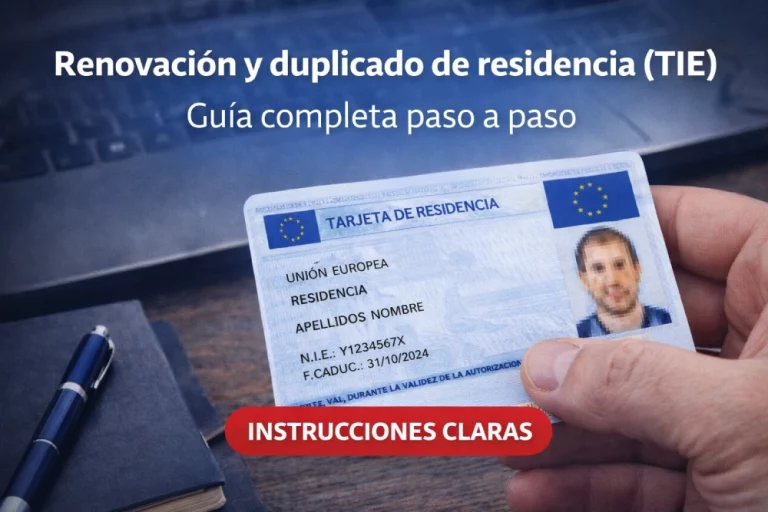
The Foreigner Identity Card (TIE) is a physical document that certifies legal residence in Spain. It contains the NIE number and serves as proof that its holder has legal status in the country. The TIE is essential for residence procedures in Spain.
Foreign nationals with a TIE may have a range of rights and obligations, including access to public healthcare and the right to work. Unlike the NIE, the TIE does confirm that its holder is legally residing in Spain, which is crucial when settling in the country.
What is the difference between the TIE and the NIE?
The key differences between the TIE and the NIE lie in their nature and purpose. The NIE is an identification number required for administrative procedures, while the TIE is a document confirming legal residence status.
- NIE: a number that identifies foreign nationals but does not guarantee residence.
- TIE: a physical document proving legal residence in Spain.
- Use: The NIE is required for administrative procedures, while the TIE provides residence and work rights.
In short, the TIE includes the NIE but serves a broader purpose and confirms that the holder is legally residing in Spain.
Do I need a TIE if I have the Registration Certificate?
No, you do not need to obtain a TIE if you already have an EU Citizen Registration Certificate. This certificate is issued to European Union citizens residing in Spain and also includes the assignment of an NIE.
The Registration Certificate already certifies legal residence in the country, so the TIE is optional for these citizens. However, having a TIE may make some administrative procedures easier.
What documents are required to apply for a TIE?
To apply for a TIE, you must submit a number of documents, which vary depending on the applicant’s status. The following are generally required:
- NIE number.
- Valid passport or identity document.
- Proof of your legal situation in Spain (such as an employment contract or municipal registration).
- Completed application form.
It is important to check whether any additional documents are required depending on your particular circumstances, such as the reason for your residence (work, studies, etc.). The TIE application process in 2024 may involve waiting times, so it is advisable to plan ahead.
What are the advantages of having a NIE rather than a TIE?
The NIE and TIE offer different advantages. The NIE is easier to obtain and is the first step for any foreign national wishing to live in Spain. However, the TIE provides additional rights and greater legal security.
- Advantages of the NIE: access to banking and administrative services.
- Advantages of the TIE: access to public healthcare and the right to work.
- The TIE is essential for non-EU nationals who wish to live in Spain long term.
Therefore, although the NIE is essential for starting any procedure, the TIE is crucial for formalising your legal status in Spain.
Related questions about the differences between the NIE, TIE and EU certificates
What are the differences between the TIE and the NIE?
There are significant differences between the TIE and the NIE. The NIE is an identification number and does not guarantee the right to reside in Spain, whereas the TIE is a document that proves legal residence. The TIE also includes the NIE, making it a more comprehensive document.
It is important to understand that although both are needed for different procedures, they serve different functions and purposes. The TIE grants additional rights that do not come simply from having a NIE.
What is the difference between the NIE and the EU Citizen Registration Certificate?
The NIE is an identification number used by all foreign nationals in Spain, whereas the Registration Certificate is exclusively for citizens of the European Union. This certificate also includes the NIE, but its purpose is to certify EU citizens’ legal residence in the country.
In short, the Registration Certificate is a more specific document that grants residence rights and access to services in Spain, whereas the NIE is more general and is needed for any administrative procedure.
What is the difference between the NIE and the EU family member residence card?
The EU family member residence card is a document that certifies the residence of family members of European Union citizens. Unlike the NIE, which is a number, the EU family member residence card is a physical document that provides certain rights, such as access to social and educational services.
The NIE is common to all foreign nationals, whereas the EU family member residence card is specifically designed to facilitate the residence in Spain of family members of EU citizens.
What are the TIE and EU Certificate?
The TIE is the document that proves a foreign national’s legal residence in Spain and is required for non-EU nationals. The EU Certificate, on the other hand, refers to the document obtained by EU citizens who reside in the country, which also includes a NIE number.
Both documents are essential for different groups of foreign nationals in Spain, ensuring that each has the appropriate identification and rights for their status.
This content is for informational purposes only and does not replace professional legal advice or information provided by the competent authorities.