Differences between the NIE, TIE and legal residence in Spain

Before starting the procedure: requirements and procedures may change. Check the information applicable to your case and consult the relevant official sources.
Spain’s identification and residence system can be confusing for many foreign nationals. Understanding the differences between the NIE, TIE and legal residence is essential for anyone who wants to live and work in the country. In this article, we explain each of these concepts and their importance under Spanish law.
What are the differences between the NIE, TIE and legal residence in Spain?
The differences between the NIE, TIE and legal residence in Spain are essential for any foreign national planning to settle in the country. First, the NIE (Foreigner Identification Number) is a unique number that identifies non-Spanish citizens before the Public Administration. This number is necessary for carrying out any administrative procedure.
The TIE (Foreigner Identity Card), on the other hand, is a physical document containing personal information and details about the holder’s type of residence. While the NIE is just a number, the TIE is a document that provides a range of legal rights and obligations.
Finally, legal residence refers to the authorization that allows a foreign national to live legally in Spain. This concept should not be confused with the NIE or TIE, since legal residence means holding a specific permit that must be applied for in accordance with the regulations in force.
What is the NIE and what is it for?
The NIE, or Foreigner Identification Number, is a unique number assigned to every foreign national in Spain. This number is essential for carrying out various administrative procedures, such as opening a bank account, signing an employment contract or purchasing real estate.
The NIE also serves as an identifier before the Public Administration, making it easier to interact with different authorities and complete procedures. It is important to note that the NIE is not a residence document but an identification number.
To obtain an NIE, you must submit certain documents, such as your passport, and complete the procedure at an Immigration Office or a National Police station. The process may vary depending on the applicant’s nationality and situation in Spain.
What is the TIE and what is its purpose?
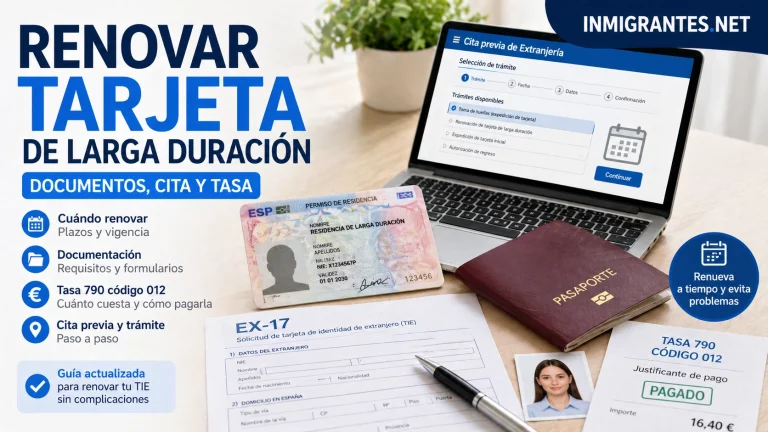
The TIE, or Foreigner Identity Card, is a document issued to foreign nationals who have a residence permit in Spain. The TIE’s main purpose is to certify that its holder is legally resident and provide relevant information, such as the duration of their residence.
The TIE includes personal details such as the holder’s name, date of birth and nationality, as well as their photograph. This document is essential for accessing public services and completing procedures in the country.
Foreign nationals who wish to work or study in Spain must obtain a TIE, as it is required to prove their legal status. Without a TIE, foreign nationals face significant restrictions in their daily lives, including the ability to work.
How do you obtain an NIE in Spain?
Obtaining an NIE in Spain is a relatively straightforward process, although it may vary depending on the applicant’s situation. The basic steps for applying for an NIE include:
- Submit the duly completed Form EX-15.
- Provide a copy of your passport or identity document.
- Justify the reason for the application, which may be for work, study or another purpose.
- Pay the applicable fee.
Once the documents have been submitted, an appointment will be scheduled to obtain the NIE. You should bring all the required documents and, if possible, apply online to avoid unnecessary waiting times.
It is important to remember that the NIE is a number that identifies a foreign national, but it does not automatically grant the holder the right to reside in Spain. To obtain this, you must apply for a TIE or a residence authorization.
Who needs a TIE, and what are the requirements?
The TIE is essential for all foreign nationals who wish to reside legally in Spain. This includes those who have obtained a residence permit, such as students, workers and people who meet the requirements for family reunification.
The requirements for obtaining a TIE are:
- Have a NIE already assigned.
- Submit the application to the relevant Immigration Office.
- Provide proof of sufficient financial means to stay in Spain.
- Have health insurance.
The process may vary depending on the applicant’s circumstances, and it is essential to gather all the necessary documents before starting the procedure. Obtaining a TIE is a key step for anyone planning to reside legally in Spain.
What are the consequences of not having legal residence in Spain?
Not having legal residence in Spain can have serious consequences for foreign nationals. Without legal status, a person’s rights are severely limited, affecting crucial aspects of everyday life.
The main consequences include:
- Being unable to work legally.
- Restricted access to public services, such as healthcare and education.
- Risk of deportation or removal from the country.
In addition, living without legal residence can make it harder to access basic services and create difficulties in everyday situations, such as renting a home or opening a bank account. It is essential to regularize your immigration status to avoid legal complications.
What procedures must you follow to obtain legal residence?
To obtain legal residence in Spain, you need to complete several procedures. These may vary depending on the type of residence you apply for, whether temporary or permanent. The basic steps are outlined below:
- Identify the type of residence authorization you need (for work, study, family reunification, among other purposes).
- Gather all the necessary documents, such as your passport, employment contract or letter of acceptance for studies.
- Submit the application to the Immigration Office or the relevant Spanish consulate.
- Wait for a decision on the application, which may take several weeks or months.
It is essential to make sure you meet all the requirements and submit the correct documents to avoid delays or refusals when applying for legal residence.
Related questions about the identification and residence of foreign nationals in Spain
What is the difference between a TIE and a NIE?
The main difference between the TIE and the NIE lies in their function. The NIE is a unique identification number assigned to foreign nationals in Spain, while the TIE is a physical document that proves a foreign national’s legal residence in the country. A NIE is required for certain procedures, but it does not guarantee the right to reside in Spain, unlike a TIE.
What is the difference between a NIE and residence?
The NIE is a number assigned to foreign nationals, but it does not mean that the holder has the right to reside in Spain. By contrast, legal residence in Spain refers to the authorization that allows a foreign national to live and work in the country. Therefore, the NIE is an administrative identifier, while legal residence is a recognized legal status.
What does it mean to have legal residence?
Having legal residence in Spain means that a foreign national has a permit allowing them to live and work in the country legally. This involves meeting certain requirements and completing an application process with the relevant authorities. It is a status that gives foreign nationals specific rights and obligations.
Is an NIE the same as residence in Spain?
No, an NIE is not the same as residence in Spain. The NIE is a number that identifies foreign nationals before the public administration, while residence refers to the authorization that allows a foreign national to live legally in the country. Both are important, but they serve different purposes.
This content is for informational purposes only and does not replace professional legal advice or information provided by the competent authorities.