
Guides by topic

Driving Procedures

Guides and resources on driving procedures in Spain.

Exchanging your driving licence in Spain

Exchanging a driving licence in Spain: requirements and DGT appointment

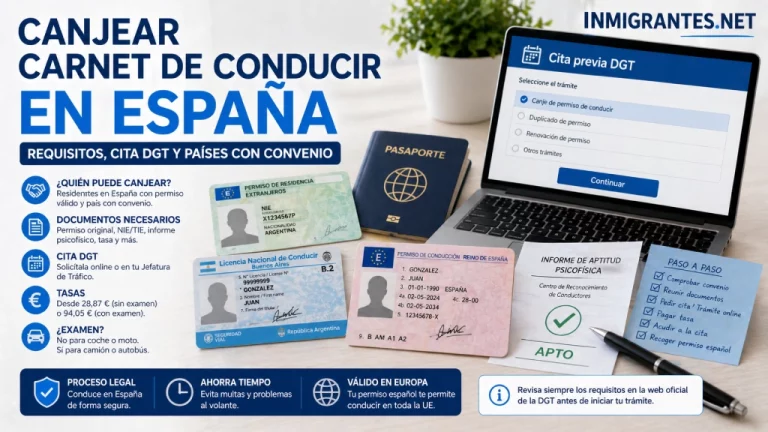
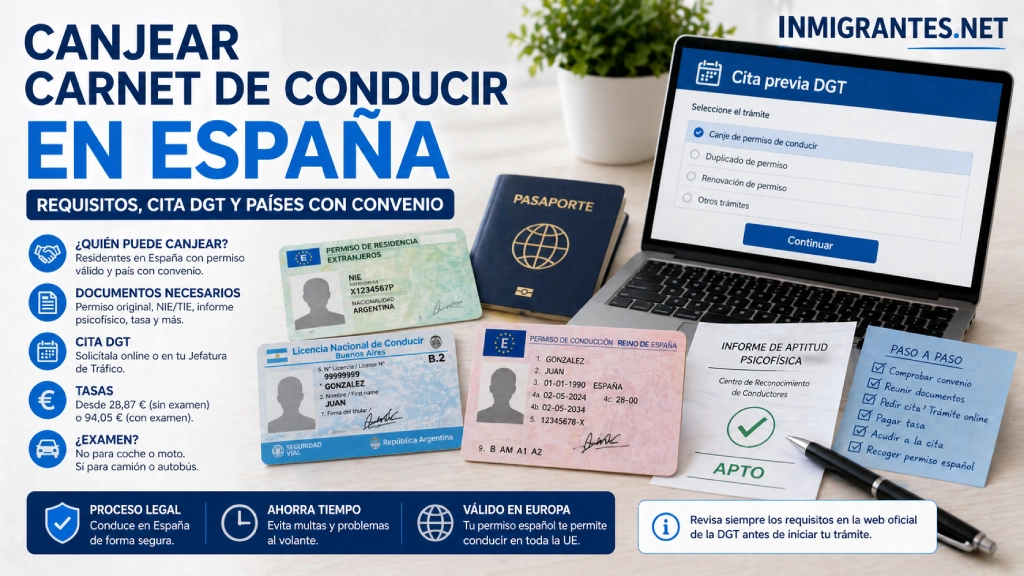
Exchanging your driving licence in Spain is the procedure for replacing a foreign driving licence with an equivalent Spanish licence, provided you meet the requirements set by the Directorate-General for Traffic (DGT) and Spain has an agreement with the country that issued your licence.

This procedure is especially important for foreign nationals already living in Spain who want to continue driving legally. This guide explains who can exchange a driving licence, which countries have an agreement, what documents you need, how to book a DGT appointment, how much it costs, when you have to take a test and which mistakes to avoid.

Quick summary

Key points for exchanging your driving licence in Spain

ResidenceYou must be a resident in Spain to apply for an exchange.
Valid licenceYour foreign licence must be valid and eligible for exchange.
AgreementYour country must appear on the list of countries with a licence exchange agreement.
Appointment or online procedureDepending on your case, you can apply for the exchange online or by booking an appointment with the DGT.

Important: if your licence was issued by a country outside the European Union or the European Economic Area, you can usually drive in Spain for a maximum of 6 months from the date you establish your normal residence. After that, if you want to continue driving, you must exchange your licence if an agreement is in place, or obtain a Spanish licence if it is not eligible for exchange.

[toc]
Exchanging a driving licence in Spain: requirements and DGT appointment
Exchanging Your Driving Licence in Spain: Requirements and DGT Appointment

What it means to exchange your driving licence in Spain

Exchanging a driving licence means replacing a foreign licence with an equivalent Spanish one. This is not the same as applying for a new licence from scratch; it means Spain recognises the driving entitlements you already hold in your country of origin.

For example, if your country has an agreement with Spain and your licence authorises you to drive a car, motorcycle or professional vehicles, the DGT may recognise those categories. In some cases, however, it may require additional tests, particularly for truck or bus licences.

Once the procedure is complete, you hand in your original foreign licence and receive an equivalent Spanish licence. In many cases, the DGT can issue a provisional driving authorisation while you wait for the permanent licence to arrive.

Who can exchange a driving licence

Not everyone can exchange their foreign driving licence. Several administrative requirements must be met for the exchange to be possible.

General requirements

  • Be resident in Spain.
  • Hold a valid, current foreign driving licence.
  • There must be a licence exchange agreement between Spain and the country that issued the licence.
  • You must have obtained the licence before becoming a legal resident in Spain, except in special cases.
  • Prove your identity and residence.
  • Submit the original licence you wish to exchange.
  • Submit a medical fitness report from an authorised Driver Recognition Centre.
  • Pay the applicable DGT fee.

Tip: Before booking an appointment or starting the process, check whether your country is on the official list of countries with an exchange agreement and whether your type of licence requires additional tests.

Driving licences from the European Union and the European Economic Area

If you hold a licence issued by a country in the European Union or the European Economic Area, such as Iceland, Liechtenstein or Norway, you can drive in Spain as long as your licence is valid and has not been withdrawn.

In these cases, exchanging your licence is usually voluntary. However, you may wish to complete procedures such as exchange, registration, renewal or replacement if your licence is about to expire, you have lost it or you want to obtain a Spanish licence.

EU/EEA licences: summary

  • You can drive in Spain as long as your licence is valid.
  • You usually do not have to exchange your licence if it is still valid.
  • If your licence expires, you may need to renew it in Spain.
  • The DGT offers various procedures for European licences.

Licences from countries outside the European Union

If your licence was issued by a country outside the European Union or the European Economic Area, different rules apply. In general, you can drive in Spain for a maximum of 6 months from the date you establish normal residence, as long as your licence is valid and you meet the minimum age required in Spain for that type of licence.

After this period, if you want to keep driving, you must exchange your licence if your country has an agreement with Spain. If there is no agreement, you cannot complete a standard exchange and will have to obtain a Spanish licence.

Situation Can you drive? What to do
You have just obtained residence in Spain Yes, for a maximum of 6 months, if your licence is valid. Check whether your country has an exchange agreement and start the process in good time.
More than 6 months have passed Your foreign licence may no longer be valid for driving in Spain. Exchange your licence if possible, or obtain a Spanish licence.
Your country has no exchange agreement You will not be able to complete a standard exchange. You will have to obtain a Spanish driving licence from scratch.

Which countries have an agreement to exchange driving licences in Spain

Spain has driving licence exchange agreements with many countries. The list may change, so you should always check it with the DGT before starting the process.

Among the countries on the DGT’s official list are, among others, Argentina, Bolivia, Brazil, Chile, Colombia, Ecuador, Morocco, Peru, the United Kingdom and Northern Ireland, the Dominican Republic, Uruguay, Ukraine, Turkey, Switzerland, Japan, South Korea, Andorra, Monaco, and several countries in the European Union and the European Economic Area.

Important: If your country is not on the list of countries with an agreement, you will generally not be able to exchange your licence through the standard procedure. In that case, you will have to obtain a Spanish driving licence.

Which driving licences cannot be exchanged

Even if your country has an agreement with Spain, there may be cases in which your licence cannot be exchanged. Here are some of the main situations:

  • Licences obtained when the holder was already legally resident in Spain.
  • Licences issued by countries that do not have a driving licence exchange agreement with Spain.
  • Licences obtained by exchanging a licence from another country that does not have an agreement with Spain.
  • Expired or invalid licences.
  • Licences that do not meet the format requirements under the applicable regulations.
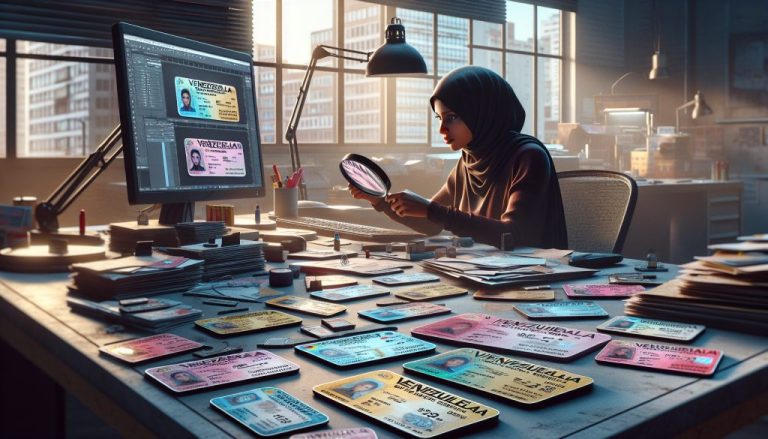
  • Venezuelan licences issued in PDF format, since the DGT states that only licences originally issued as plastic cards can be exchanged.

Documents required to exchange your driving licence

The documents required may vary depending on the country where the licence was issued and the type of exchange, but the DGT will generally require proof of identity and residence, the original licence, proof of physical and mental fitness, and payment of the fee.

Document Purpose Tip
Official application Allows you to start the exchange process with the DGT. Make sure the details match those on your identity document.
DNI, NIE, TIE, passport or residence authorization Proves your identity and residence status. Bring the original, valid document and a copy if you are completing the process in person.
Proof of residence Shows that you live in Spain. This may be a TIE, EU registration certificate or other documents requested by the Provincial Traffic Headquarters.
Proof that you were not living in Spain when you obtained the licence This is used to check that you obtained the licence before becoming legally resident in Spain. Depending on the case, you may need to provide a consular certificate, residence card, registration certificate or other documents.
Original foreign driving licence This is the document to be exchanged. It must be current and valid, and it will be surrendered when the procedure is completed.
Psychophysical fitness report It certifies that you are fit to drive. It must be issued by an authorised Driver Assessment Centre.
DGT fee It certifies that you have paid the fee for the procedure. The fee varies if the exchange requires additional tests.

How much does it cost to exchange a driving licence?

The cost depends on whether the exchange requires additional tests. For the most common motorcycle or car licence exchanges, when no test is required, the fee is usually II.3. If the licence includes professional categories, such as lorries or buses, fee II.1 may apply if tests are required.

Type of exchange Usual fee Indicative amount
Exchange without additional tests Fee II.3 28,87 €
Exchange with additional tests Fee II.1 94,05 €

Before paying, always check which fee applies to your country and licence category. Exchanging a car licence is not the same as exchanging a professional licence authorising you to drive a lorry or bus.

Do you have to take a test to exchange your driving licence?

Many motorcycle or car licence exchanges do not require a test. However, some professional licences may require additional tests.

Motorcycles and cars

For category A and B licences, the exchange is usually direct if the country has an agreement with Spain and the requirements are met.

Lorries and buses

For category C and D licences, a practical test may usually be required and, depending on the country, a specific theory test may also be required.

How to book a DGT appointment to exchange your driving licence

Exchanging licences from countries with an agreement must be processed through the DGT. In many cases, you can start the procedure online, although you may later need to go to a DGT office to surrender the original licence and obtain the provisional authorisation.

Usual steps

  1. Check whether your country has a driving licence exchange agreement with Spain.
  2. Check whether your country requires a reference number or prior verification of the licence.
  3. Obtain a medical fitness report from an authorised centre.
  4. Prepare your identity document, proof of residence and original driving licence.
  5. Apply to exchange your licence through the DGT online portal or by appointment, depending on your case.
  6. Pay the relevant fee.
  7. Respond to any requests to correct or complete your application if the DGT asks for additional documents.
  8. When instructed, attend in person to hand in your original foreign licence and collect your provisional authorisation.

Digital exchange of a driving licence

The DGT has introduced the digital exchange of driving licences to make part of the process available online. You can submit your application online, provide documents and move your case forward without needing to book an in-person appointment from the outset.

Even so, in many cases you will need to attend the Traffic Headquarters in person once your application has been approved, especially to hand in your original foreign licence and receive provisional authorisation to drive.

What you need for the digital exchange

  • Access to the DGT online portal.
  • A digital certificate, Cl@ve or an authorised representative.
  • Legible digital copies of your documents.
  • A medical fitness report.
  • An active email address for receiving communications from the DGT.

How long does it take to exchange a driving licence?

Processing times can vary considerably. They depend on the country that issued the licence, whether prior verification is required, whether you need to take additional tests and whether your documents are complete.

If everything is in order, the DGT may issue provisional authorisation when you attend to complete the process. The final licence is usually sent to the address you provided, although the exact timeframe may vary depending on workload and the type of application.

Tip: Don’t wait until you have been resident for 6 months if you need to drive for work. If your country requires licence verification, processing may take longer.

Where to exchange your driving licence

Your application to exchange your licence is handled by the Directorate-General for Traffic. Depending on your case, you can start the process online through the DGT online portal or apply by appointment at a Traffic Headquarters or Traffic Office.

The specific location will depend on the province, the type of licence, the country that issued it and whether you need to hand in your original foreign licence in person.

General guidance

Not sure whether you can exchange your driving licence?

If you have questions about your country, documents, DGT appointment or whether your licence is still valid in Spain, check your situation before driving.

Request an online consultation

Common mistakes when exchanging a driving licence

These are the most common mistakes that can delay or prevent the exchange:

  • Assuming that all foreign driving licences can be exchanged.
  • Trying to exchange a licence from a country with no agreement.
  • Having obtained the foreign licence after becoming a legal resident in Spain.
  • Submitting an expired or invalid licence.
  • Failing to provide the medical fitness report.
  • Failing to provide adequate proof of residence.
  • Failing to respond to a DGT request to provide or correct documents on time.
  • Driving after 6 months, assuming that the foreign licence is still valid.
  • Failing to check whether your licence category requires additional tests.

Frequently asked questions about exchanging a driving licence in Spain

What do I need to exchange my driving licence in Spain?

You normally need to be a resident in Spain, hold a valid and current foreign licence, have a country of origin that has an agreement with Spain, provide proof of identity and residence, submit the original licence, obtain a medical fitness report and pay the relevant fee.

How long can I drive in Spain with a foreign driving licence?

If your licence was issued by a country outside the European Union or the European Economic Area, you can normally drive for a maximum of 6 months from the date you establish your normal residence in Spain, provided your licence is valid and you meet the age requirement.

Which countries’ driving licences can be exchanged in Spain?

Licences issued by countries in the European Union and the European Economic Area, as well as by other countries that have a bilateral agreement with Spain, can be exchanged. These include Argentina, Bolivia, Brazil, Chile, Colombia, Ecuador, Morocco, Peru, the United Kingdom, the Dominican Republic, Uruguay, Ukraine, Switzerland, Japan, South Korea, Andorra, Monaco and others. Always check the DGT’s current official list.

Do I have to take a test to exchange my driving licence?

For motorcycle or car licences, you usually do not have to take any tests if the country has an agreement with Spain and you meet the requirements. For professional lorry or bus licences, you may have to take a practical test and, depending on the country, a specific theory test as well.

How much does it cost to exchange a driving licence?

The cost depends on whether the exchange requires tests. Exchanges that do not require additional tests are usually subject to fee II.3, which is approximately 28,87 €. If additional tests are required, fee II.1 may apply, which is approximately 94,05 €.

Where do I exchange my driving licence?

The exchange is processed by the Dirección General de Tráfico (DGT). Depending on your case, you can start the process online through the DGT’s Government online portal or by booking an appointment at a Provincial or Local Traffic Office.

Can I exchange a licence obtained after moving to Spain?

In general, foreign licences obtained after a person has become a legal resident in Spain cannot be exchanged, unless there is a specific circumstance that can be used to justify it.

What happens if my country has no agreement with Spain?

If your country has no agreement with Spain on exchanging licences, you will normally be unable to exchange your licence through the standard process. In that case, you will have to obtain a Spanish driving licence.

Final note: Requirements may vary depending on the country where your licence was issued, the type of licence, when you obtained it and your residence status in Spain. Before driving or starting the exchange process, always check the DGT’s official information and the documents required in your case.


Updating driving licence details (NIE to DNI)

DGT online portal – Replacement driving licences due to a change of details (name, sex or NIE to DNI)

Updating driving licence details is essential for anyone who has changed their name, sex or Foreigner Identification Number (NIE) to a Spanish National Identity Document (DNI). This procedure can be completed in person or through the online portal of the Directorate-General for Traffic (DGT).

In this article, we will guide you through the steps required to update driving licence details (NIE to DNI), as well as the documents required and the estimated processing times.

How can I update my driving licence details (NIE to DNI) with the DGT?

To update your driving licence details, it is important to follow a clear process. First, go to the DGT online portal, where you will find the section for changing your details.

You may need a digital certificate, electronic DNI or Cl@ve credentials to complete the procedure online. If you choose to do it in person, you can visit a DGT office for assistance.

Once you have submitted your application, you will receive a notice indicating its status. This step is essential to keep your details up to date and ensure that all the information associated with your driving licence is correct.

What documents do I need to change from NIE to DNI with the DGT?

When changing from NIE to DNI, it is essential to have the correct documents to hand. You will generally need:

  • A copy of your NIE and current DNI.
  • Application form for changing your details.
  • Documents supporting the change (for example, a certificate of change of name or sex).

Make sure all documents are properly signed and legible. Missing documents may delay the process of updating driving licence details (NIE to DNI).

Remember that if you complete the procedure online, some documents may be required in digital format, so you should have scanned copies ready.

How long does the DGT take to update details after a change from NIE to DNI?

The response time for updating your details may vary. The DGT generally estimates that the process can take between one and two months. However, this may depend on the office's workload.

Please note that if you have applied for a replacement driving licence, it will be sent to the address you provided with your application, and delivery may take an additional month.

If you need your details updated urgently, it is advisable to complete the procedure in person, as this may speed up the process.

How do I apply for a duplicate driving licence after a change of details?

To apply for a duplicate driving licence because your details have changed, follow these steps:

  1. Access the DGT’s government online portal or visit a DGT office.
  2. Complete the duplicate licence application form.
  3. Provide the documents required to justify the change of details.
  4. Pay the applicable fee.

Once you have completed these steps, the DGT will process your application and, if everything is in order, send the duplicate to the address you provided.

This duplicate is fully valid and has the same validity as the original licence, so your legal status as a driver will not be affected.

Can I apply for a duplicate driving licence online?

Yes, you can apply for a duplicate driving licence online through the DGT’s government online portal. This option is increasingly popular because it is convenient and quick.

To apply for a duplicate driving licence online, you will need a digital certificate, an electronic DNI, or Cl@ve login credentials. This process means you do not need to visit an office and lets you complete the entire procedure from home.

Remember that you must meet all the requirements and provide the necessary documents to ensure the process goes smoothly.

Where do I notify the DGT of a change from NIE to DNI?

You must notify the DGT directly of the change from NIE to DNI. If you complete the update of driving licence details (NIE to DNI) online, the DGT is notified automatically during the process.

If you prefer to do this in person, you can visit any DGT office and report the change. It is advisable to go to the same office that originally issued your driving licence.

It is important to check that your information is up to date to avoid future problems when driving or carrying out other related administrative procedures.

Related questions about updating your details with the DGT

How can I update my details from NIE to DNI?

You can update your details from NIE to DNI through the DGT. You need to submit the required documents and follow the procedure set out on the DGT’s government online portal or at one of its offices. Make sure you have all the required documents to avoid delays.

You can complete the process online using a digital certificate or in person. Make sure the DGT has all your details correctly recorded to avoid problems in the future.

How long does the DGT take to update details?

The time it takes the DGT to update your details can vary, but it is generally estimated to take between one and two months. If you apply in person, you may receive a response sooner. It is advisable to check your application status through the channels provided by the DGT.

How can I change my personal details with the DGT?

Changing your personal details with the DGT is straightforward. You must access the DGT’s government online portal or visit one of its offices. You will need to complete a form and submit documents justifying the change. Make sure your details are always up to date to avoid problems when carrying out procedures.

Where do I need to notify the authorities of a change from NIE to DNI?

You must notify the DGT of the change from NIE to DNI. If you complete the procedure online, the DGT is notified automatically. If you prefer to do this in person, you can visit any DGT office. Make sure your details are updated correctly to avoid problems in the future.

Vehicle ownership transfer: everything you need to know

Transferring a vehicle is an essential step when buying a second-hand car. In this article, we explain how to complete the process, what documents you need, and the advantages of using online platforms to speed things up.

Completing a vehicle transfer correctly is crucial to avoid problems later on. Below, we explain the steps and requirements you need to meet.

How do you transfer a vehicle online?

Completing a vehicle ownership transfer online is a straightforward process that can be done in just a few steps. First, you will need access to a platform offering this service, such as Transferencia24 or Swipoo.

Once you have registered on the platform, you will need to upload the required documents. These usually include:

  • Identification for both parties (seller and buyer).
  • A purchase and sale agreement signed by both parties.
  • The vehicle's technical inspection certificate.
  • Vehicle registration certificate.

After you upload the documents, the platform will guide you through the process. You will generally receive a provisional receipt allowing you to drive while you wait for the new registration certificate, which usually takes around 15 days to arrive.

What documents do I need to transfer a vehicle?

The documents required to transfer a vehicle are essential to ensure the process goes smoothly. Here is a list of the documents you will need to submit:

  1. Official identification: DNI or NIE for both parties.
  2. Purchase and sale agreement: A signed document confirming the transaction.
  3. Vehicle technical inspection certificate: This document contains the car's specifications.
  4. Vehicle registration certificate: A document that authorizes the vehicle to be driven legally.
  5. Proof of payment of the Property Transfer Tax: This tax must be paid before the transfer is completed.

Make sure you have these documents to hand, as missing any of them may delay the process. The DGT (Directorate-General for Traffic) may also request additional information in certain cases.

What are the benefits of transferring vehicle ownership online?

Choosing to complete the vehicle ownership transfer online offers several advantages over the traditional method. These include:

  • Speed: The process can be completed in less than 24 hours.
  • No need to travel: You can do everything from the comfort of your home.
  • Automation: The platforms guide you through every step, minimising errors.
  • Customer support: Many platforms offer support to answer any questions you may have.

In addition, platforms such as Transferencia24 let you upload documents directly from your device, making the process even easier. You can also receive a provisional document authorising you to drive the vehicle, which is a great advantage if you need to use it straight away.

How long does it take to transfer vehicle ownership?

The time it takes to transfer vehicle ownership can vary depending on several factors. Generally, if you use an online platform such as Swipoo, the process is completed in less than 24 hours, although it may take up to 15 days to receive the new vehicle registration certificate.

It is important to bear in mind that the DGT sets a maximum period of 30 days to transfer ownership after the sale. If you do not complete the transfer within this period, you could face penalties.

Therefore, it is advisable not to leave the process until the last minute. When you start the process online, you will receive clear information about the estimated time and the steps to follow.

Can I transfer vehicle ownership without using an agency?

Yes, it is entirely possible to transfer vehicle ownership without using an agency. Online platforms provide all the tools you need to complete the process yourself. This means you can avoid the costs of hiring an agency, saving a considerable amount.

When using these services, you simply need to follow the steps indicated on the platform. Assistance will be available if you have any questions, helping to ensure the process is straightforward and quick.

However, if you would prefer the peace of mind of having a professional handle the process for you, you can always use an agency. But completing the transfer through online platforms such as Transferencia24 can save you time and money.

What taxes do I have to pay when transferring a vehicle?

When you transfer vehicle ownership, it is important to bear in mind that you will have to pay certain taxes. One of the main taxes is the Property Transfer Tax (ITP), which is calculated based on the vehicle's value.

The amount you have to pay varies depending on the autonomous community where you live, but it is generally between 4% and 8% of the sale price. This tax must be paid, and proof of payment must be provided when transferring ownership.

Remember that, in addition to this tax, you may have to pay other fees depending on the process involved. Therefore, it is advisable to find out about all the costs before starting the process.

How can I make sure the transfer of my vehicle is safe?

To ensure that the transfer of your vehicle is safe, it is essential to follow a few important steps:

  • Check the vehicle's administrative status with the DGT.
  • Make sure the seller is the registered owner of the vehicle.
  • Ask for a well-drafted purchase contract signed by both parties.
  • Use reputable online platforms that offer safeguards throughout the process.

By following this advice, you can minimise risks and make sure the transaction is completed correctly. It is also advisable to keep copies of all documents related to the transfer in case they are needed in the future.

Related questions about transferring vehicle ownership

How do you transfer a car between private individuals?

To transfer a car between private individuals, you first need to make sure you have all the necessary documents, such as both parties' DNI and the purchase contract. You can then choose to complete the process through the DGT or use online platforms that make it easier.

The seller must sign the purchase contract and give all the related documents to the buyer, who must then complete the relevant procedure. The platform you choose will guide you through each stage of the transfer.

What do I need to transfer vehicle ownership?

To transfer vehicle ownership, you need identification for both parties, the purchase contract, the vehicle's technical specifications sheet and its vehicle registration certificate. You must also provide proof of payment of the Property Transfer Tax to complete the process correctly.

Make sure all your documents are ready and up to date. This will prevent problems during the transfer and help make the process faster and more efficient.

How much does it cost to transfer a car?

The cost of transferring a car can vary depending on the autonomous community and whether you use an agency or an online platform. Generally, you will have to pay Property Transfer Tax, which ranges from 4% to 8% of the vehicle's sale price, as well as any fees the platform may charge for its service.

It is advisable to find out about all the fees before proceeding to avoid any surprises along the way. This will help you calculate the total amount you will need to complete the transfer successfully.

What do you need to do to transfer a car into your name?

To transfer a car into your name, you need to follow a few key steps. First, make sure you have all the necessary documents, such as the purchase agreement, and pay the Property Transfer Tax.

You can then start the transfer process through the DGT or an online platform. In the latter case, you will only need to upload the required documents and follow the instructions provided.

It is important to complete this procedure within the established period of 30 days to avoid possible penalties. Keep a copy of all the related documents for your records.

Fake Venezuelan Driving Licences | Complete Guide

Fake Venezuelan driving licences have become a prominent issue, particularly in the context of Venezuelan migration to Spain. As more Venezuelans seek new opportunities abroad, the need for a valid driving licence becomes an essential part of daily life. This complete guide aims to provide detailed information about this issue and how to handle it.

Throughout this article, we will explore what fake Venezuelan driving licences are, how to identify them, the legal consequences of having one, and the process for exchanging a licence in Spain. We will also address frequently asked questions that may arise in this context.

What is a fake Venezuelan driving licence?

A fake Venezuelan driving licence is a document that was not issued by the relevant authorities in Venezuela but is presented as if it had been. These documents may be forged for various reasons, including a lack of access to the legal procedures for obtaining a driving licence.

Many Venezuelans have reportedly fallen victim to scams while trying to obtain a legitimate driving licence. This has created a black market where fake documents circulate and can often look authentic at first glance.

In the current migration context, the need for a valid driving licence is becoming more pressing, leading some people to opt for forged licences. However, this can have serious legal consequences in the destination country.

How can you tell if a driving licence is fake?

Identifying a fake driving licence is not always easy, but there are certain signs that may indicate it is not genuine. Here are some points to consider:

  • Check holograms and watermarks: Official documents generally have security features that are difficult to replicate.
  • Print quality: A fake licence may have printing errors, such as poor alignment or blurred text.
  • Inconsistent details: Check that the personal information matches public records.
  • Format: The Directorate-General for Traffic (DGT) uses a standardised format; any differences may indicate forgery.

If you have any doubts, it is also advisable to contact the relevant authorities, such as the Civil Guard, to verify the document’s authenticity.

What types of Venezuelan driving licences are there?

There are different types of Venezuelan driving licences, classified mainly according to the category of vehicle they authorise you to drive. The most common are:

  • Type A: For motorcycles.
  • Type B: For passenger vehicles.
  • Type C: For goods vehicles.

These licences may come in different formats, including plastic cards and PDF documents. Variations in design and the lack of up-to-date security regulations have led to confusion about the authenticity of certain licences.

It is important to note that some licences considered fake may be legal in Venezuela but do not meet European requirements. Therefore, you should always check their legality with the relevant authorities.

How can I exchange a Venezuelan driving licence in Spain?

The process of exchanging a Venezuelan driving licence in Spain can be complicated, especially if your licence is not considered valid. To complete this procedure, you must follow certain steps:

  1. Gather the required documents: These include your original licence, passport and proof of residence.
  2. Book an appointment with the DGT: You must book an appointment with the Directorate-General for Traffic (DGT) to start the process.
  3. Submit your application: At your appointment, you must submit all the documents and pay the required fees.
  4. Take tests if necessary: Depending on the assessment of your licence, you may need to take theory and practical tests.

If you have any questions or need further advice about the process, contact the Consulate of Venezuela in Spain.

What should I do if I am accused of having a fake licence?

Being accused of having a fake licence can be a stressful and complex experience. Here are some recommendations on what to do:

  • Legal advice: Contact a lawyer specialising in immigration who can guide you through the legal process.
  • Gather evidence: Try to obtain documents proving that your licence is legal, such as receipts or correspondence with the consulate.
  • Cooperate with the authorities: It is very important to be transparent and cooperate with the investigation.

Not having the proper documents can make the situation even more complicated, so it is essential to act quickly and seek legal advice.

What are the consequences of using a fake driving licence?

The consequences of using a fake driving licence can be severe and vary depending on the laws of the country you are in. Possible consequences include:

  • Fines and penalties: You may face significant financial penalties.
  • Detention: In some cases, you may be held temporarily until the situation is clarified.
  • Deportation: If the document is found to be fake, you could be deported.

In addition, a criminal record for document forgery can affect your future employment and immigration opportunities, making it essential to act with caution and verify the authenticity of the documents you hold.

What are the steps for validating a Venezuelan driving licence?

Validating a Venezuelan driving licence requires attention to detail. The steps include:

  1. Contact the competent authorities: You can start the validation process through the Directorate-General for Traffic (DGT) or the Consulate of Venezuela in Spain.
  2. Provide the documents: You must submit the licence along with other documents supporting its authenticity.
  3. Wait for confirmation: This process may take some time, so it is important to be patient and follow the instructions you are given.

Remember that, if you have any questions or encounter difficulties, consulting a specialist lawyer can make the process easier and help ensure your rights are respected.

Related questions about the legality of Venezuelan driving licences

How can I tell if my Venezuelan driving licence is fake?

To determine whether your Venezuelan driving licence is authentic, it is essential to carry out a series of checks. First, inspect the document’s security features, such as holograms and watermarks. Then check that the information matches official records. If you still have doubts, you can contact the Directorate-General for Traffic (DGT) or the Consulate of Venezuela in Spain for further advice.

Is a Venezuelan driving licence valid in Spain?

Whether a Venezuelan driving licence is valid in Spain depends on its authenticity. If the licence is genuine and meets the required regulations, it may be exchanged. However, licences that are not considered legal can cause problems if you try to use them in Spain. It is therefore essential to verify that your licence is authentic before starting any related procedure.

When can a Venezuelan driving licence be exchanged in Spain?

Exchanging a Venezuelan driving licence in Spain is subject to the current policies of the Directorate-General for Traffic (DGT). This process can currently take time, and it is advisable to look out for official announcements about any changes to the regulations. The Consulate of Venezuela in Spain may also be able to provide up-to-date information on this matter.

How can you verify a Venezuelan driving licence?

A Venezuelan driving licence can be verified through the competent authorities, such as the Directorate-General for Traffic. You will need to present the licence along with other documents proving its authenticity. The process may vary, so it is advisable to seek accurate information and follow all the steps specified by the relevant authorities.

Exchanging a Driving Licence: How to Book an Appointment and Requirements

Exchanging a driving licence in Spain is an essential process for people who want to have their foreign licence recognised. This procedure allows residents in the country to use their driving licence without having to obtain a new one. Below, we cover everything you need to know about this process.

What does exchanging a driving licence in Spain involve?

Exchanging a driving licence in Spain means having a foreign driving licence recognised by the DGT (Directorate-General for Traffic). This process is particularly relevant to foreign residents in Spain who hold a valid driving licence from their home country.

This procedure not only makes driving easier but also ensures that foreign licences comply with Spanish regulations. Drivers can then drive with a Spanish licence, avoiding penalties and legal problems. It is important to note that this process is designed to make driving easier for people arriving in the country.

How does the driving licence exchange process work?

The process for exchanging a driving licence begins with booking an appointment at a DGT office. You can do this online through the DGT’s official website. Once you have booked your appointment, you must attend the relevant office to complete the procedure.

At the appointment, the official will review the documents you submit and assess whether your foreign driving licence meets the requirements. It is essential to ensure that all your documents are in order to avoid any problems. The DGT will verify that the licence is genuine and proceed with the exchange.

What are the requirements for exchanging a driving licence in Spain?

The specific requirements for exchanging a driving licence in Spain vary depending on the country that issued it. However, there are some general conditions you must meet:

  • Be a legal resident of Spain.
  • Hold a valid foreign driving licence.
  • The licence must not have been obtained in a country with which Spain has no agreement.
  • You must not have previously held a Spanish driving licence.
  • Submit the documents required to prove your identity and residence.

It is also important to remember that some licences, such as those issued by law enforcement agencies or diplomatic authorities, may be subject to different specific conditions. Therefore, it is always advisable to check the current regulations and applicable international agreements.

How do I book an appointment to exchange my driving licence?

To book a DGT appointment to exchange your driving licence, follow these steps:

  1. Go to the DGT’s official website.
  2. Select the appointment option. It is usually highlighted on the homepage.
  3. Choose the type of procedure you wish to carry out—in this case, exchanging your driving licence.
  4. Select the nearest office and the date and time that suit you best.
  5. Confirm the appointment and note down the reference number you are given.

It is essential to arrive on time for your appointment and bring all the required documents. Arriving late or missing a document may mean you have to reschedule, delaying the exchange process.

What documents do I need to provide to exchange my driving licence?

The documents required to exchange your driving licence vary depending on your country of origin. In general, you will need:

  • Your original driving licence and a copy.
  • A valid identity document or passport.
  • Proof of residence in Spain (such as municipal registration).
  • Recent passport-sized photographs.
  • Documents proving that your licence is valid in your country of origin.

We recommend checking the specific requirements on the DGT website before your appointment to make sure you have all the necessary documents and avoid any problems.

How long does it take to exchange a driving licence in Spain?

The time it takes to exchange a driving licence in Spain can vary depending on several factors, such as the DGT’s workload and the complexity of your case. The process generally takes anywhere from a few weeks to several months.

Once you have submitted all the documents and completed the procedure, your new driving licence may be sent by post to your address. In some cases, it may be issued at the office, depending on the workload and processing times.

Can all driving licences be exchanged in Spain?

Not all driving licences can be exchanged in Spain. Some licences, particularly those issued in countries with which Spain has no exchange agreement, cannot be validated. For example, if a legal resident in Spain obtained a licence in a country not recognised under the exchange system, it will not be valid for the procedure.

Applicants should find out about the international agreements and specific rules that apply to their country of origin. This will help ensure that the exchange procedure goes smoothly.

Frequently asked questions about exchanging a driving licence

What do I need to exchange my driving licence?

To exchange your driving licence, you must meet the requirements set by the DGT and submit the relevant documents. These include your original driving licence, an identity document, proof of residence, photographs and any other documents needed to confirm that your licence is valid in your country of origin.

It is essential to submit all these documents at your appointment to avoid delays. Making sure that all the information is correct will help the exchange process go smoothly.

How do I book a DGT appointment to exchange my driving licence?

You can book an appointment to exchange your driving licence online through the DGT’s official website. The process is straightforward: select the office, the type of procedure and your preferred date. Remember to have all the information you need to complete the appointment form ready.

We recommend booking in advance, as appointments can be in high demand, especially during peak seasons. Make sure you have your appointment reference number with you on the day you visit the DGT.

Which countries can exchange their driving licences in Spain in 2024?

In 2024, the countries whose driving licences can be exchanged in Spain are those that have specific agreements with the Spanish government. These include many European Union countries, as well as countries that have bilateral agreements with Spain.

To check whether your country is on the list of countries whose licences can be exchanged, consult the DGT website, which provides updates on current agreements.

How much does it cost to exchange a driving licence?

The cost of exchanging a driving licence varies depending on several factors, such as the type of licence and the regulations in force. An administrative fee is generally charged, which applicants must pay when completing the procedure.

Check the DGT website for the applicable fees and make sure you have the correct amount ready to avoid any problems during the process.

Online consultation with a lawyer Get answers to your immigration questions