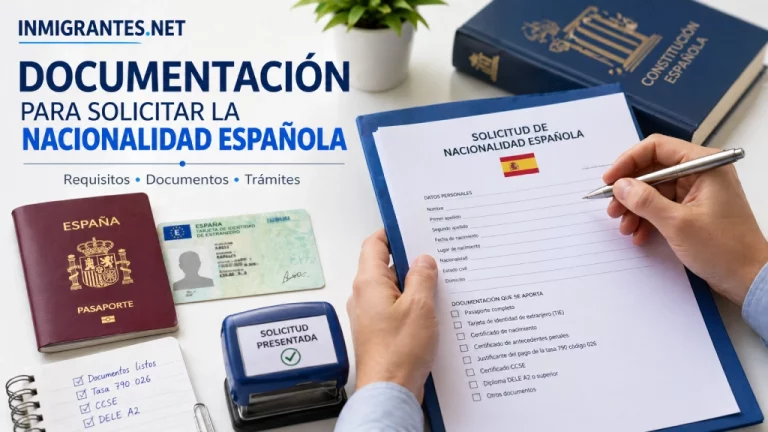
Golden rules for obtaining Spanish citizenship fast!

Before starting the procedure: requirements and procedures may change. Check the information applicable to your case and consult the relevant official sources.
Obtaining Spanish citizenship has become increasingly relevant in recent years. There are various routes and requirements which, if properly met, can help you acquire it more quickly. Here are the key points to help you achieve this.
Spanish Citizenship | All the Information
Spanish citizenship is the legal bond between a person and the Spanish State. This right can be acquired in several ways, each with its own characteristics and requirements. Knowing about the different options will help you choose the one best suited to your personal circumstances.
Citizenship can be acquired through naturalisation, by option, by grant of discretionary naturalisation (carta de naturaleza), or by residence. Of these, residence is usually the most common route. The required period of residence can vary depending on your nationality, which means some nationalities have a shorter path to citizenship.
What is Spanish citizenship?
Spanish citizenship is a legal status that grants a person the rights and duties established by the Spanish Constitution and laws. This bond not only allows you to live and work in Spain, but also gives you access to social benefits and political rights.
One important feature of Spanish citizenship is that dual citizenship is permitted in many cases, which is attractive to those who wish to retain their original nationality. As mentioned, citizenship can be acquired through various routes, each with its own specific characteristics.
Citizenship is essential for accessing healthcare, education and employment rights. It also serves as a passport for travelling to and residing in other European countries, thanks to Spain’s membership of the European Union.
How can you obtain Spanish citizenship?
Spanish citizenship can be obtained through several routes. The most common are:
- By residence: After a specified period of legal residence in Spain.
- By option: For people with family ties to Spanish citizens.
- By grant of discretionary naturalisation (carta de naturaleza): A more discretionary process that requires exceptional circumstances.
Each of these routes has specific requirements that must be met. For example, to obtain Spanish citizenship by residence, you must prove that you have lived legally and continuously in the country for a specified period, which can range from one to ten years depending on your nationality.
Meeting these requirements is key to achieving your goal quickly.
What are the requirements for Spanish citizenship by residence?
The requirements for obtaining Spanish citizenship by residence are essential and must be met in full. Some of the most relevant include:
- Legal and continuous residence: You must have lived legally in Spain for at least ten years, although this period is reduced to two years for nationals of Latin American countries.
- Documents: Birth certificates, criminal record certificates, and passing the language and culture tests.
- Good civic conduct: The applicant’s conduct during their stay in Spain will be assessed.
Meeting these requirements will not only make it easier to obtain Spanish citizenship, but will also help ensure that the process is as quick as possible. It is important to be well informed and prepared for every stage of the procedure.
What is Spanish citizenship by option?
Citizenship by option is intended for people with family ties to Spanish citizens and provides a way to acquire Spanish citizenship. The following people may apply for this type of citizenship:
- Children of Spanish citizens: Born abroad.
- Descendants of Spanish citizens: Who can prove their lineage.
The process involves proving family ties and may be much quicker than other methods, since it does not require a long period of residence in Spain.
This type of citizenship is ideal for people with Spanish parents or grandparents, as it gives them the opportunity to access rights and benefits in Spain.
What documents do you need to apply for Spanish citizenship?
Documentation is a critical part of the Spanish citizenship application process. Some of the most important documents you will need are:
- Birth certificate: It must be legalised and translated into Spanish if necessary.
- Criminal records: Both in Spain and in your country of origin.
- Proof of residence: Such as employment contracts or bills in the applicant’s name.
It is also important to submit the application correctly, as any errors may delay the process. Keeping all your documents well organised and ensuring that each one meets the requirements will be key to a smooth process.
How long does the Spanish citizenship process take?
The time it takes to obtain Spanish citizenship can vary significantly. In general, the average is between six months and one year, but in some cases it may take longer. Factors that can affect the timeframe include:
- Complexity of the case: Whether there are any questions about the documents or residence.
- The administration’s workload: The number of applications being processed at that time.
It is essential to keep track of your application status and promptly provide any additional information if requested. This can help speed up the process and avoid unnecessary delays.
What are the benefits of obtaining Spanish citizenship?
Obtaining Spanish citizenship comes with many benefits. Some of the main ones include:
- Access to the European labour market: You can work in any EU country without restrictions.
- Family reunification: Makes it easier for close family members to reside legally in Spain.
- Access to healthcare and social assistance: Ensures rights within the healthcare system and access to social benefits.
In addition, Spanish citizenship allows you to vote and have a say in the country’s political affairs. This makes citizenship a valuable asset for any citizen.
Related questions about how to obtain Spanish citizenship quickly
What is the fastest way to obtain Spanish citizenship?
The quickest way to obtain Spanish citizenship is usually through citizenship by option, especially if you have Spanish parents or grandparents. This route avoids long residence periods and makes the administrative process easier.
However, it is essential to meet all documentary and legal requirements to ensure the application is processed smoothly.
How can you speed up the Spanish citizenship process?
To speed up the Spanish citizenship process, it is advisable to submit all documents complete and well organised. Also, ensuring that all documents have been duly legalised and translated can help prevent delays.
Another recommendation is to regularly check the status of your application through official channels, which can provide clarity on any additional document requests.
What are the requirements for obtaining Spanish citizenship in 2024?
In 2024, the requirements for obtaining Spanish citizenship remain similar to those in previous years. Applicants must have legal residence, submit documents such as birth and criminal record certificates, and pass cultural and language integration tests.
It is essential to stay informed about any legislative changes that may arise and review the regulations in force before starting the process.
How long does each stage of the citizenship process take in 2024?
Each stage of the citizenship process can take a different amount of time. Submitting the documents may be immediate, but administrative review can take six months to a year. Actively monitoring your application can help minimise delays.
Remember that the total time depends on factors such as the volume of applications and the complexity of your individual case.
This content is for informational purposes only and does not replace professional legal advice or information provided by the competent authorities.