New TIE Card Model

Before starting the procedure: requirements and procedures may change. Check the information applicable to your case and consult the relevant official sources.
The new TIE card model is an essential document for foreign nationals living in Spain. Since its introduction on 19 May 2020, it has brought significant changes to its design and features, in line with EU Regulation 2017/1954. This article provides all the information you need to understand this new model and manage the related procedures.
The Foreigner Identity Card (TIE) is essential for ensuring your legal stay in Spain. In this article, we explore its features, the requirements for applying for one, how to renew it, and much more.
What is the new TIE card model?
The new TIE card model is the updated version of the card that foreign nationals residing in Spain must obtain. This document serves not only as proof of the cardholder’s identity but also confirms their legal status in the country. It was introduced to comply with European regulations and improve document security.
The new model’s design includes several innovations, such as an RFID chip that enables faster and more efficient reading at security checks. This makes it easier to access biographical data and verify the cardholder’s identity during Spanish immigration procedures. It is also mandatory for those who have received a residence authorization after Brexit.
This model applies to residents from non-EU countries, except cross-border workers. Obtaining a TIE is a crucial step after receiving a residence authorization, ensuring that foreign nationals’ rights are recognized during their stay in Spain.
What are the features of the new TIE card model?
The features of the new TIE card model set it apart from previous versions. Here are some of its most notable features:
- Standardized format: All TIE card models have a standardized appearance, making them easier to recognize.
- Incorporation of technology: The RFID chip is one of the most notable innovations, enabling faster scanning at checkpoints.
- Advanced security features: It includes features such as holograms and special inks that make counterfeiting more difficult.
- Biometric data: The TIE stores biometric information, providing greater security.
With these features, the new TIE card model not only improves users’ experience when interacting with the authorities but also strengthens the security of residents’ documents.
How to download and complete form EX-17?
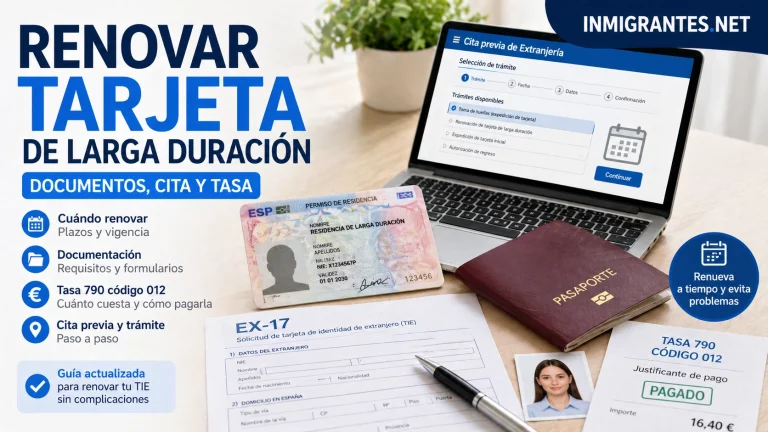
To obtain the new TIE card model, you must complete form EX-17. This document is essential for applying for the card at any office of the Directorate-General of Police.
Follow these steps to download and complete the form:
- Visit the official website of the Ministry of the Interior or the Directorate-General of Police.
- Find the forms section and select form EX-17.
- Download the document in PDF format.
- Complete the form with the required information, making sure all the details are correct.
It is important to check the form carefully before submitting it, as any errors could delay the process of obtaining your TIE.
What is the TIE fee and how do you pay it?
The TIE fee is the amount applicants must pay to obtain the card. The fee varies depending on several factors, such as the period for which the TIE is valid.
The fee payment procedure is as follows:
- Go to the Directorate General of the Police website.
- Select the section for fees.
- Pay using one of the available methods, which may include a credit card or online payment systems.
It is essential to keep the proof of payment, as you will need to submit it with the rest of your documents when applying for your TIE.
How do you book an appointment to obtain your TIE?
Booking an appointment to obtain the new TIE model is an essential step in the process. You can easily book an appointment through the Directorate General of the Police website.
To book an appointment, follow these steps:
- Go to the Directorate General of the Police website.
- Go to the “Appointment” section.
- Select the type of procedure you wish to complete.
- Choose the date and time that suits you best.
It is advisable to plan ahead, as appointments can be in high demand, especially during peak periods.
What types of TIE are there, and how do they differ?
There are several types of TIE, each designed for different situations. Here are some of the most common types:
- Long-term TIE: For residents who have obtained long-term residence authorization.
- Short-term TIE: For people with temporary permits.
- TIE for studies: For students residing in Spain for academic purposes.
- TIE for work: For foreign nationals who have found employment in the country.
The main differences concern the validity period and the rights granted by each type of card, so it is important to choose the right one for your situation.
What are the requirements for renewing a TIE?
The TIE renewal process must be completed before the card expires. The renewal requirements include:
- Submit the duly completed Form EX-17.
- Provide a recent colour photograph.
- Provide proof of payment of the applicable fee.
- Show that the conditions for the residence authorization continue to be met.
It is essential to start this process well in advance to avoid the document expiring and potential legal problems during your stay in Spain.
Frequently asked questions about the new TIE card
How many types of TIE cards are there?
There are several types of TIE card, each suited to different circumstances. From student TIE cards to long-term TIE cards, each has its own features and requirements. It is therefore essential to know which type you need for your situation.
What types of TIE cards are there?
The types of TIE card include short-term, long-term, student and work TIE cards. Each type has a specific purpose and gives foreign nationals in Spain different rights and obligations. Knowing the differences is key to completing the procedures correctly.
What is Form EX17?
Form EX17 is the form required to apply for a Foreigner Identity Card (TIE). It is an essential document that, once correctly completed and submitted, allows foreign nationals to manage their legal status in Spain. This form is required for any procedure related to the TIE.
What does the TIE card in Spain look like?
The TIE card in Spain has a modern, secure design. It includes an RFID chip, photographs of the cardholder and other security features, such as holograms. Its standardised appearance makes it easy for the authorities to recognise, facilitating its use for checks and verification.
This content is for informational purposes only and does not replace professional legal advice or information provided by the competent authorities.