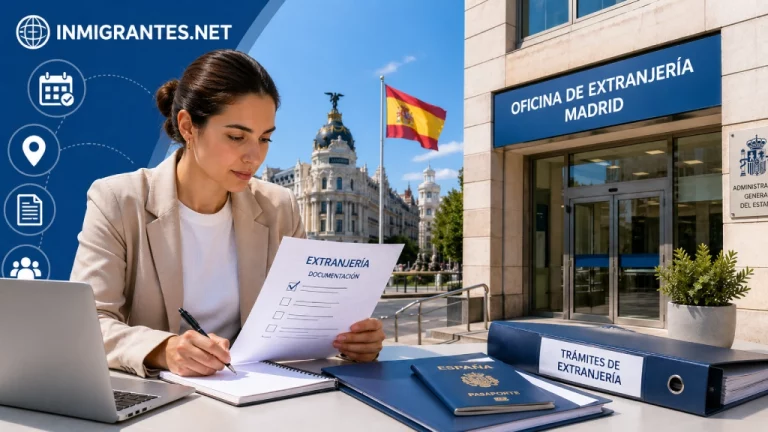
Special feature on the reform of Spain’s immigration regulations

Before starting the procedure: requirements and procedures may change. Check the information applicable to your case and consult the relevant official sources.
The recent approval of the new Immigration Regulations by Spain’s Council of Ministers, led by Minister Elma Saiz, marks a significant change in migration policy. The reform aims not only to simplify procedures but also to improve the social and employment integration of nearly seven million foreign nationals in the country.
The reform is presented as a response to the current needs of the labour market, while ensuring the protection of migrants’ human rights and aligning with European regulations.
What is the new immigration law for immigrants?
Spain’s new immigration law for immigrants is a regulatory framework intended to update and improve migrants’ living conditions. These regulations aim to make it easier for many foreign nationals to regularize their immigration status.
The law establishes clear, simplified procedures for obtaining residence and work permits, thereby promoting a more inclusive migration policy. One of the reform’s central pillars is arraigo social (the social-integration residence route), which will allow a large number of migrants to regularize their status.
The aim is also to eliminate discrimination in access to employment opportunities and foster a fairer, more equal environment for everyone. The regulations are expected to benefit approximately 300,000 migrants each year.
What are the key points and new features of the new immigration regulations?
The new immigration regulations introduce several changes that will directly affect migrants’ lives. The main points include:
- Shorter processing times: Response times for immigration procedures have been reduced, making the process faster.
- Simplified procedures: Unnecessary steps that made it harder for migrants to regularize their status have been removed.
- Arraigo social: This new concept will allow migrants who have lived in the country continuously to regularize their status.
- Access to formal employment: The reform aims to connect migrants with the labour market and promote their integration.
These measures are also expected to promote social inclusion, enabling migrants to contribute more effectively to the Spanish economy. In this way, cultural diversity is recognized as an asset that enriches society.
How will the reform of the immigration regulations affect migrants in Spain?
The reform of the immigration regulations is designed to have a direct, positive impact on migrants’ lives. The ultimate aim of this legislative change is to ensure that migrants can enjoy the same rights and opportunities as Spanish citizens.
One of the most significant effects will be improved access to the labour market. The creation of a catalogue of occupations that are difficult to fill will enable migrants to find work in sectors facing labour shortages. This will benefit not only workers but also businesses in need of qualified staff.
Integration programmes will also be established to help migrants adapt to Spanish culture and society. Promoting training and language learning will be essential to this process.
What changes will the new immigration law bring in 2024?
The new immigration law, which will come into force in 2024, is expected to bring substantial changes to migration management. One of the most anticipated changes is the introduction of a process for mass regularization of migrants.
This regularization is expected to allow hundreds of thousands of people to obtain legal status in the country, thereby facilitating their access to basic rights and formal employment. This change is essential to ensure that all migrants are treated with dignity and respect.
Another significant change will be the creation of a digital system for managing procedures, enabling migrants to complete their administrative processes more efficiently and quickly. Digitalization is key to simplifying processes that were previously cumbersome and complicated.
What challenges remain in integrating migrants?
Despite the progress the new immigration law is expected to bring, several challenges remain in integrating migrants in Spain. One of the main challenges is workplace discrimination.
Although the law aims to make it easier to access employment, it is crucial that migrants are valued for their skills and not discriminated against because of their origin. Raising public awareness and promoting diversity are essential to achieving genuine integration.
Support and guidance services for migrants are also essential. A lack of information can be a significant obstacle for those seeking to settle in the country. Creating accessible resources available in several languages will be key to overcoming this challenge.
What information does the immigration regulations PDF contain?
The immigration regulations PDF contains a wide range of crucial information to help readers understand migrants’ rights and obligations. Topics covered include:
- Application procedures: Details on how to submit applications for permits and the documents required.
- Migrants’ rights: A list of the rights migrants are entitled to under the new regulations.
- Authorities’ obligations: The responsibilities of institutions in their treatment and support of migrants.
This document is essential for any migrant who wants to learn how to benefit from the reform and understand their rights under the new legal framework.
How will migrant regularization be carried out in 2024?
Migrant regularization in 2024 will be carried out through a structured process designed to be as inclusive and accessible as possible. Clear criteria will be established to guide migrants on their path to obtaining legal status.
The process will include:
- Evidence of ties to Spain: Migrants will have to demonstrate their connection to the country through work, study or family ties.
- Required documents: The documents needed to begin the regularization process will be specified.
- Deadlines: Approximate time frames for each stage of the process will be communicated to ensure transparency.
These measures will be implemented under the supervision of the Government of Spain, ensuring that migrants’ rights are respected throughout the process.
Frequently asked questions about the reform of the immigration regulations
When will the new immigration regulations be introduced in 2024?
The new immigration regulations are expected to be implemented from 2024. They will bring a series of significant changes to Spanish migration policy that will benefit millions of migrants.
What is the reform of the immigration regulations?
The reform of the immigration regulations refers to the updating of the rules governing migrants’ status in Spain. The reform aims to improve access to regularization and make it easier for migrants to integrate into Spanish society.
When does the immigration reform come into force?
The immigration reform, which includes the new regulations, will come into force on 1 January 2024. From that date, migrants will be able to benefit from the new procedures and rights established.
When will regularization in Spain take place in 2024?
Migrant regularization in Spain will begin during the first half of 2024. The process is expected to be transparent and accessible to all migrants who meet the criteria established by the new legislation.
This content is for informational purposes only and does not replace professional legal advice or information provided by the competent authorities.