Residence in Spain for Colombians: requirements and options

Before starting the procedure: requirements and procedures may change. Check the information applicable to your case and consult the relevant official sources.
Residence in Spain for Colombians is a topic of great interest to many people who want to settle in this European country. With the Colombian population growing, it is essential to understand the options and requirements for obtaining residence.
Spain offers several types of residence, both temporary and long-term. In this article, we will look at the different options available to Colombians who wish to reside legally in Spain.
Benefits for Colombians in Spain
Colombians who decide to settle in Spain enjoy many benefits. First, Spain has a robust public healthcare system that provides medical care to its residents. The culture and language also make it easier to integrate.
Obtaining residence in Spain as a Colombian can also open the door to employment, education and business opportunities. Access to training programmes and scholarships is appealing to young Colombians.
The Colombian community in Spain is also very active and supportive, helping new immigrants adapt and find a place where they feel at home.
Arraigo social (social-integration residence route) for Colombians in Spain
Arraigo social is one way a Colombian can obtain residence in Spain. This type of permit is intended for people who have lived in the country for a certain period and have demonstrated their social ties there.
To qualify for this type of residence, it is essential to submit documents proving that you have been legally staying in the country for at least three years and to demonstrate ties to the community, such as having a job or family in Spain.
You must also have no criminal record and have an employment contract or an integration plan showing your intention to remain in Spain on a stable basis.
Residence permits in Spain for non-EU nationals
As non-EU citizens, Colombians must meet specific requirements to obtain a residence permit. These include proving that they have sufficient financial resources to live in the country, as well as health insurance.
There are different types of residence permits, depending on whether you wish to work, study or join family members. Those interested should find out about the available options and application process at embassies or diplomatic missions.
The Spanish government sets regulations that must be followed without exception, making compliance essential for a successful residence application.
How to get Spanish residency quickly
Obtaining residence in Spain as a Colombian may seem complicated, but there are ways to speed up the process. One option is to have an employment contract before arriving in the country, which makes it easier to obtain a work-based permit.
Keeping all the required documents in order and submitting your application at the relevant embassy or diplomatic mission may also shorten waiting times. It is advisable to consult specialists who can guide you through the process.
Another tip is to keep up with changes to Spanish immigration legislation, as these may create new opportunities or make procedures easier.
How to get a NIE in Spain as a Colombian
The Foreigner Identification Number (NIE) is an essential document for any Colombian who wishes to live in Spain. This number allows you to carry out everyday activities such as opening a bank account, signing contracts and working.
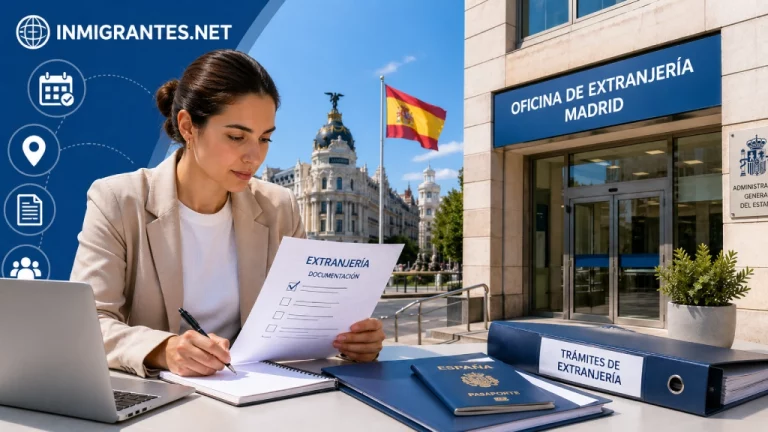
To obtain an NIE, you must submit certain documents to the relevant police station. These include an application form, your passport and a recent photograph.
Once you have applied, the process can take a few weeks, so it is advisable to start as soon as possible after arriving in Spain.
What documents do I need to apply for a residence permit in Spain?
The documents required to apply for a residence permit may vary depending on the type of residence, but some documents are commonly required, including:
- Valid passport.
- Completed application form.
- Proof of sufficient financial means (bank statements, employment contract).
- Health insurance.
- Criminal record certificate.
It is essential to make sure that all documents are in order and translated into Spanish, if necessary, as any inconsistency can delay the process. It is also important to submit your application to the correct office to avoid problems.
Applying for non-lucrative residence from Spain
Non-lucrative residence is an option for people who want to live in Spain without working. It allows you to reside in the country for a set period, provided you can demonstrate that you have sufficient means to support yourself during your stay.
To apply, Colombians must submit documents proving that they have sufficient financial means, as well as private health insurance. This type of residence is an excellent option for people who want to enjoy Spanish culture and climate without needing to work.
It is important to remember that although non-lucrative residence is temporary, it can be renewed if you meet the established requirements.
Residence and work permit in Spain
A residence and work permit is one of the most sought-after options for Colombians who wish to settle in Spain. This permit allows you to work legally in the country, and you must have an employment contract before applying.
The requirements include submitting the employment contract, proof that the employer is up to date with their tax obligations, and evidence that no candidates are available in the European Union for the position offered.
With this permit, Colombians benefit from greater stability and employment rights in Spain, which are essential for successful integration into Spanish society.
Frequently asked questions about residence in Spain for Colombians
What does a Colombian need to obtain residence in Spain?
A Colombian must meet certain requirements, such as having a valid passport, demonstrating sufficient financial means and having health insurance. Depending on the type of residence applied for, additional documents may be required, such as a criminal record certificate or an employment contract.
It is crucial to submit your application to the correct embassy or diplomatic mission and keep track of response times, which can vary considerably.
How can Colombians obtain an NIE in Spain?
To obtain an NIE, you must go to the nearest police station and submit the application form, your passport and a recent photograph. This process is essential for anyone wishing to live and work in Spain.
It is advisable to complete this process as soon as possible, as an NIE is essential for carrying out various activities in the country.
How many years do I need to live in Spain to obtain residence?
The time required to obtain residence in Spain may vary depending on the type of permit. For example, to qualify for Arraigo social (the social-integration residence route), you must have lived in Spain legally for at least three years. For other types of residence, such as temporary residence, the process may be quicker if you have an employment contract.
It is important to find out about each type of residence and its specific requirements so that you can plan accordingly.
How long does a Colombian need to live in Spain before obtaining Spanish citizenship?
In general, a Colombian must have lived legally in Spain for ten years before applying for Spanish citizenship. However, there are exceptions: Colombians married to Spanish citizens can apply after one year of marriage.
The process of obtaining Spanish citizenship can be lengthy and requires meeting certain conditions, such as demonstrating integration into Spanish society and knowledge of the language.
This content is for informational purposes only and does not replace professional legal advice or information provided by the competent authorities.