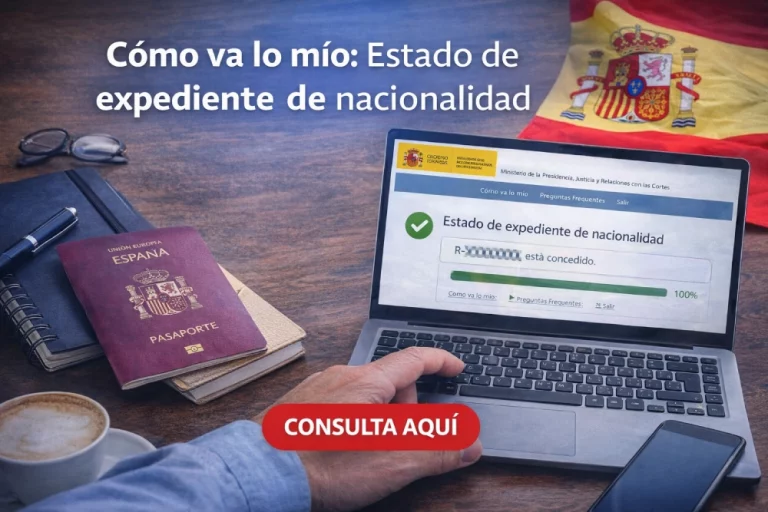
What is Spanish citizenship?

Before starting the procedure: requirements and procedures may change. Check the information applicable to your case and consult the relevant official sources.
Spanish citizenship is a legal bond between an individual and the Spanish State, granting them certain rights and obligations. This status is governed by the Spanish Constitution and the Civil Code, which set out the rules for acquiring, retaining and losing it. In this article, we will explore in depth the different ways to obtain Spanish citizenship and the requirements involved, as well as its benefits.
Read on to better understand this fundamental concept and learn about the implications and procedures involved in obtaining Spanish citizenship.
What is citizenship?
Citizenship is a legal status that defines a person's membership in a State. This bond entails rights and duties that vary according to each country's laws. In Spain, citizenship is governed by the Constitution and the Civil Code.
Citizenship is not only about identifying with a country; it also entails responsibilities, such as obeying the law and paying taxes. It can also affect access to certain public services and benefits.
There are different types of citizenship, including citizenship by origin and acquired citizenship. The former is obtained through ancestry, while the latter may be acquired for various reasons, such as residence or marriage.
It is important to note that citizenship differs from residence, which only involves living in a country and does not carry the rights and obligations associated with citizenship.
What is Spanish citizenship by residence?
Spanish citizenship by residence allows foreign nationals to obtain citizenship after living in Spain for a specified period. This is one of the most common ways to acquire citizenship.
- Residence requirements: Applicants are generally required to have lived legally in Spain for ten years. However, this period may be shorter in certain cases, such as for citizens of Ibero-American countries.
- Social integration: Applicants must demonstrate their integration into Spanish society, including knowledge of the language and culture.
- Required documents: Applicants must submit several documents, such as a DNI or passport, a residence permit and a criminal record certificate.
To apply for Spanish citizenship by residence, you must submit an application to the relevant Civil Registry. Once submitted, the waiting time can vary, but the process is usually lengthy.
How can you acquire Spanish citizenship by birth?
Spanish citizenship by birth is granted to children born to Spanish parents, regardless of their place of birth. However, there are also cases in which citizenship can be acquired when one parent is Spanish and the other is a foreign national.
Children of foreign nationals born in Spain may acquire Spanish citizenship if at least one of their parents has lived legally in the country for a specified period. This right is governed by the Civil Code, which sets out the criteria for acquiring citizenship.
The documents usually required to apply for citizenship by birth include a birth certificate and, in some cases, the parents' citizenship records. This process is generally simpler than other routes.
What are the requirements for applying for Spanish citizenship through marriage?
Spanish citizenship through marriage is granted to foreign nationals who marry a Spanish citizen. This process is designed to make it easier for foreign spouses to integrate into Spanish society.
The requirements for applying for Spanish citizenship through marriage are as follows:
- The marriage must be officially registered with the Civil Registry.
- The applicant must demonstrate at least one year of legal residence in Spain.
- The applicant must continue living with their Spanish spouse without interruption.
In addition to meeting these requirements, the applicant must submit documents including the marriage certificate, their DNI or passport, and proof of residence. This route to Spanish citizenship is considered relatively fast.
Is it possible to obtain Spanish citizenship quickly?
How quickly you can obtain Spanish citizenship varies depending on the procedure and route you choose. However, some methods can speed up the process.
For example, applying for citizenship through marriage may be a faster route, as the law simplifies some requirements. In addition, the required residence period is shorter for applicants from an Ibero-American country.
However, the process can generally take a long time because of the workload at Immigration Offices and the Civil Registry. It is essential to meet all the requirements and submit the correct documents to avoid delays.
Can I retain dual citizenship?
Whether you can retain dual citizenship depends on the laws of the countries concerned. Spain allows dual citizenship with certain countries, particularly those in Latin America, Portugal and Andorra.
However, a Spanish citizen who acquires the citizenship of a country that does not allow dual citizenship may lose their Spanish citizenship. It is essential to check the laws of each country before proceeding with the application.
Dual citizenship offers benefits, such as access to rights and services in both countries, but it may also involve tax and legal obligations in both territories.
What are the advantages and disadvantages of Spanish citizenship in 2024?
Spanish citizenship comes with many advantages and some disadvantages that are important to consider.
Advantages:
- Access to fundamental rights and public services in Spain and the EU.
- The ability to live and work in other European Union countries without needing additional permits.
- Opportunities to vote in elections and have a say in Spanish politics.
Disadvantages:
- Possible tax obligations in Spain, even if you live in another country.
- The possibility of losing Spanish citizenship if you acquire another citizenship that does not allow dual citizenship.
In summary, Spanish citizenship can offer significant benefits in terms of rights, but it can also entail responsibilities that should be carefully considered.
Related questions about Spanish citizenship
What does it mean to have Spanish citizenship?
Having Spanish citizenship means being legally recognised as a citizen of the Spanish state, with the rights and duties that entails. This status gives you access to public services, the right to vote in elections and legal protection under the Spanish Constitution.
What is the difference between residence and citizenship in Spain?
Residence refers to a person's lawful stay in the country without necessarily granting them the rights of citizenship. Citizenship, on the other hand, grants full rights and obligations, allowing people to take an active part in the country's social and political life.
What are the requirements for obtaining Spanish citizenship?
The requirements vary depending on the citizenship route applied for, but generally include proof of legal residence, meeting certain cohabitation periods and submitting specific documents, such as criminal record and marriage certificates, where applicable.
Once you are granted Spanish citizenship, what do you need to do?
Once Spanish citizenship has been granted, you must register it with the Civil Registry, where your acquired citizenship will be recorded. You must also apply for a DNI and a Spanish passport to exercise the rights that come with this citizenship.
This content is for informational purposes only and does not replace professional legal advice or information provided by the competent authorities.