Updated guide: Recognition of foreign qualifications in Spain—what procedure do you need, and how can you avoid mistakes? Not all foreign qualifications are processed…
Studying in Spain is an increasingly popular option for international students seeking a rewarding educational experience. This article explores the 10 key points about study stays, providing valuable information about the requirements, application process and other important aspects.
With its rich academic and cultural offerings, Spain has become an attractive destination for those wishing to study abroad. Below, we take a closer look at the details of this type of stay.
What is authorization to stay for studies in Spain?
A authorization to stay for studies allows international students to live in Spain while pursuing official studies, such as undergraduate or postgraduate degrees or language programmes. This authorization is essential for enjoying the experience of studying in a diverse, multicultural country.
In addition to their academic studies, students can benefit from various opportunities, such as work placements or volunteering programmes, further enriching their experience.
An authorization to stay for studies not only opens doors to education but also provides cultural immersion in a new environment. Studying in Spain is an opportunity to learn the language and gain an in-depth understanding of Spanish culture.
What are the requirements for authorization to stay for studies in Spain?
To obtain a authorization to stay for studies, applicants must meet certain requirements for staying in Spain for studies. Here are some of the most important ones:
Be accepted by a recognised educational institution in Spain.
Show that you have sufficient financial means to cover your expenses during your stay, with a minimum of 600 € per month.
Have health insurance that includes medical assistance and repatriation cover.
You must also submit the required documents, such as your passport, letter of acceptance and proof of enrolment commitment. Each requirement is crucial to ensuring that the student complies with the established regulations.
It is also important to check whether the educational institution offers specific programmes for international students, as these may help with the adjustment process and the necessary procedures.
How do you apply for an authorization to stay for studies?
The application for an authorization to stay for studies can be submitted in one of two ways: through the consulate in your country of origin or directly in Spain. The steps to follow are outlined below:
Gather all the required documents, including the forms, passport, letter of acceptance and health insurance.
Submit the application at the consulate or at the Immigration Office in Spain.
Wait for the decision, which may take several weeks, and make sure all the documents are in order.
It is advisable to start the process well in advance, as any setbacks may delay your arrival in the country and the start of your studies. Planning is key to ensuring a smooth experience.
In addition, during this process, it is advisable to stay in touch with the educational institution for guidance and support with the application.
What type of education is required to study in Spain?
To study in Spain, students must meet certain requirements for full-time education in Spain. These usually include:
Having completed the previous level of education required for admission to the chosen programme.
Demonstrating proficiency in the language of instruction, which is generally Spanish, although some programmes are taught in English.
Providing an academic record documenting their previous studies.
It is important to check each institution’s specific requirements, as they may vary. Some universities may require entrance exams or interviews.
In addition, training programmes must be approved and recognised by the Spanish education system for the stay to be valid.
Who can accompany the student during their stay?
Students’ family members may also be able to accompany them during their stay in Spain. Students’ family members may include spouses and children, who can apply for a similar authorization.
For a family member to accompany the student, the student must demonstrate that they have sufficient financial means to support their family during the stay.
These family members must submit their own documents, such as marriage or birth certificates. The application must be submitted jointly with the student’s application or at the same time.
How long can a stay for studies last?
The length of a stay for studies may vary depending on the duration of the academic programme. It generally lasts one academic year and, in some cases, may be extended to up to three years for master’s or postgraduate programmes.
It is possible to apply to extend the stay if certain requirements are met and the relevant documents are submitted on time. Students should keep track of deadlines to avoid problems.
In addition, the authorization to stay can be renewed if the student decides to continue their studies in a different programme, provided they meet the established requirements.
Related questions about authorization to stay for studies in Spain
Which courses qualify for an authorization to stay for studies?
Qualifying courses for an authorization to stay for studies include university degrees, master's degrees and vocational training programmes, as well as language courses and other educational qualifications. These programmes must be officially recognised by the Spanish education system.
Students can also choose exchange programmes offered by partner universities, allowing them to earn academic credits both in their home country and in Spain. This broadens their educational opportunities.
How do you extend your authorization to stay for studies in Spain in 2025?
To extend their authorization to stay for studies in Spain, students must submit an extension application before their current authorization expires. This must be done at the relevant Immigration Office, together with documents proving that they are continuing their studies and have sufficient financial means.
Requirements may change, so it is advisable to stay informed about the specific requirements for an extension in 2025. Planning ahead and submitting the application on time are essential to avoid any problems.
What can I do if my authorization to stay for studies is refused?
If an application for authorization to stay for studies is refused, the applicant has the right to appeal the decision. It is important to read the refusal notice carefully, as it sets out the reasons for the decision.
The appeal may include additional documents demonstrating that the requirements have been met. You can also seek legal advice to improve your chances of success on appeal.
What are the benefits of studying in Spain?
Studying in Spain offers many benefits, including the opportunity to learn a new language, immerse yourself in a rich and diverse culture, and access high-quality education at renowned universities.
Students can also build professional networks, which may be crucial for their future careers. They can also enjoy living in a European country and take advantage of its location to travel to and explore other countries.
Student mobility and long-term stays for study have become crucial aspects of international education. With new regulations and opportunities, students can take part in various training activities and volunteering services that enrich their educational experience.
In this article, we will explore the different aspects of long-term stays for study, as well as the requirements and benefits of mobility, volunteering and training programmes available in Spain.
What is the authorization to stay for studies in Spain?
Authorization to stay for studies in Spain is a permit that allows foreign students to study in the country. This process is governed by Royal Decree 1155/2024, which updates the Immigration Act and establishes new regulations for international students.
Students can use this authorization to enrol at recognised educational institutions, giving them a valuable academic experience. It is important to note that this authorization covers not only university studies but also other types of training, such as language courses and master's programmes.
In addition, recent legislation aims to provide greater clarity and legal certainty in the application process. International students should therefore make sure they are informed about the procedures and requirements for obtaining this authorization.
What are the requirements for applying for a student visa?
To obtain a student visa for Spain, applicants must meet several requirements set by the Ministry of Inclusion. First, they must present a valid passport with at least one year of validity remaining.
Enrolment in an educational programme at a recognised institution.
Proof of sufficient financial means to cover living and maintenance costs.
Health insurance covering the duration of the study programme.
Submit an application before the course start date.
Any additional documents that may be requested by the competent authority.
Submitting these documents correctly is essential to avoid delays in the process. Students are also advised to consult the Spanish embassy or consulate in their country to make sure they meet all the requirements.
How do you extend your authorization to stay for studies in Spain in 2025?
You can apply to extend your authorization to stay for studies before the initial visa period ends. Under the new regulations, students must submit their extension application at least 60 days before their current authorization expires.
The extension procedure requires certain documents, including an acceptance letter from the educational institution and evidence that the student is complying with the visa requirements. The requirements for extending your study authorization include:
Proof of continued participation in the training programme.
Proof of sufficient financial resources.
Documents proving medical insurance coverage.
With the new regulations coming into force, the process is expected to become faster and less bureaucratic, allowing students to focus on their studies and personal development.
What opportunities do volunteering services offer students?
Volunteering services are an excellent opportunity for international students, allowing them to get involved in the community and gain work experience. Volunteering offers students many benefits, including improved interpersonal skills and a better understanding of other cultures.
Volunteering not only supports personal development but can also be recognised in academic and professional settings, enhancing a student's CV. Students can get involved in a range of areas, such as:
Working with local NGOs.
Environmental projects.
Educational and cultural activities.
Helping at community events.
Taking part in volunteering activities in Spain also helps students practise the language and make friends, enriching their experience in the country.
Who can apply for authorisation to stay for training activities?
Authorisation to stay for training activities is intended for students who wish to undertake internships or non-formal training at educational institutions or companies. This option is ideal for those seeking to supplement their academic studies with work experience.
Applicants must be students at recognised institutions and meet the requirements set out in the regulations. The authorisation may be extended to students in various fields, including professional internships, specialist courses and research programmes.
It is essential for interested students to research the different options available and consult their educational institutions for accurate information about the procedures to follow.
What are the regulations on student mobility in Spain?
Student mobility in Spain is subject to specific regulations designed to facilitate educational and cultural exchange between countries. The new regulations set out clear rules for student mobility, promoting exchange programmes and collaboration between educational institutions.
The regulations also aim to ensure that students' rights are protected and that institutions meet the established standards. Students should inform their institutions that they are interested in taking part in mobility programmes, as the process must be properly coordinated and managed.
Mobility programmes offer enriching academic and cultural experiences, allowing students to broaden their horizons and build an international network of contacts.
What documents are required to apply for authorisation to stay?
To apply for authorisation to stay, students must submit a range of documents to support their application. Some of the most important documents are:
A valid passport.
Proof of enrolment in a study programme.
Proof of sufficient financial resources.
Medical insurance covering the period of stay.
Additional documents requested by the competent authority.
Applicants must ensure that all documents are complete and up to date to avoid problems during the application process.
Related questions about studies, student mobility and volunteering
How many hours can you work while authorised to stay for studies?
Students who have authorisation to stay for studies in Spain can work up to 20 hours per week during the academic term. This limit is intended to ensure that students remain focused on their studies and are not overburdened with work.
It is important for the work to be related to the training they are receiving, as this not only allows them to earn an income but also to gain relevant experience in their field of study.
How do you extend your authorization to stay for studies in Spain in 2025?
As mentioned above, an extension of the authorization to stay for studies must be requested before the current authorization expires. Students must submit the application along with the required documents and meet the requirements established by the new regulations.
The extension is generally granted for one additional year, provided that the student can justify continuing the educational programme and demonstrate that all the necessary conditions are met.
How long does authorization to stay for studies in Spain last?
The duration of authorization to stay for studies in Spain may vary depending on the type of programme in which the student is enrolled. Generally, the initial authorization is granted for up to one year, with the possibility of an extension provided the requirements are met.
The new regulations aim to provide greater clarity about the duration of the stay and the possibilities for extending it, which is particularly beneficial for students on long-term programmes.
The European Qualifications Framework (EQF) is an essential tool for education and employment in Europe, designed to make qualifications easier to understand and compare across member countries. Of its eight levels, Level 6 stands out for its relevance in academic and professional contexts.
This article explores the meaning and importance of the European Qualifications Framework and Level 6, as well as their impact on education and the labour market, with clear examples and answers to frequently asked questions.
What is the European Qualifications Framework?
The European Qualifications Framework is a reference system developed by the Council of the European Union that makes it possible to compare educational and professional qualifications across different European countries. Established by Recommendation 2017/C 189/03, the EQF is organised into eight levels, each of which clearly and precisely defines learning outcomes.
This framework not only helps facilitate the recognition of academic qualifications, but also promotes educational and labour mobility between Member States. Its aim is to enable each country to align its national qualifications systems with this common framework, thereby improving the transparency and transferability of qualifications in Europe.
One of the EQF’s most significant features is its focus on learning outcomes, which refer to what a person knows, understands and can do after completing a learning process. This includes both theoretical knowledge and practical skills.
What is Level 6 of the European Qualifications Framework used for?
Level 6 of the EQF is essential for those seeking to advance in specific professional fields or pursue further studies. This level corresponds to higher education focused on mastering in-depth knowledge in a particular area.
The main uses of Level 6 include:
Access to master’s and specialist programmes at universities.
Improved job opportunities in fields that require a high level of qualification.
Facilitating the recognition of qualifications in other European countries.
The Level 6 requirement has also been incorporated into immigration and residence policies in several countries, where this qualification is required for certain types of permits. This demonstrates the importance of the European Qualifications Framework and Level 6 not only in education, but also in the professional and social spheres.
What are the levels of the European Qualifications Framework?
The EQF is structured into eight levels, ranging from basic to advanced education. Here is a brief overview of these levels:
Level 1: Basic education.
Level 2: Lower secondary education.
Level 3: Upper secondary education.
Level 4: Intermediate-level vocational training.
Level 5: Higher-level vocational training.
Level 6: Bachelor's degree or equivalent.
Level 7: Master's degree or equivalent.
Level 8: Doctorate or equivalent.
Each of these levels is defined by the degree of complexity and autonomy expected in learning and performing tasks. Level 6, in turn, is associated with in-depth knowledge of a specific discipline and the ability to apply that knowledge in professional settings.
Which countries are driving the European Qualifications Framework?
All European Union Member States are committed to establishing and implementing the EQF. Countries such as Germany, France and Spain have been pioneers in creating national qualifications systems aligned with the European framework.
In addition, non-EU European countries such as Norway and Iceland have also shown interest in integrating their education systems into the EQF. This joint commitment aims to facilitate labour mobility and educational mobility, making it easier for European citizens to work or study in other countries.
Promoting the EQF is a strategy to ensure that qualifications are comparable and recognised, thereby encouraging lifelong learning and improving opportunities in the European labour market.
How does the EQF facilitate labour mobility?
The European Qualifications Framework plays a crucial role in promoting labour mobility by providing a clear framework for comparing qualifications. This enables employers to quickly understand the education and skills level of candidates from different countries.
The EQF facilitates labour mobility in several ways, including:
Providing a common language for describing qualifications.
Improving understanding of training and skills requirements across different labour markets.
Helping professionals effectively demonstrate their training and experience.
Thanks to this framework, workers can seek job opportunities in other EU countries, thereby improving their employability and contributing to the destination country's economy.
What other qualifications are associated with Level 6?
EQF Level 6 is associated with various qualifications that are essential for accessing advanced professional roles. These include bachelor's degrees, as well as certain professional certifications requiring a similar academic level.
Qualifications commonly associated with this level include:
University bachelor's degrees.
Professional certifications in technical and academic fields.
Training programmes requiring a high degree of specialisation.
This level is key for those seeking to advance their careers or gain access to postgraduate programmes, helping them acquire the skills and knowledge needed for professional development.
Related questions about the European Qualifications Framework and Level 6
What is Level 6 of the European Qualifications Framework (EQF)?
The EQF Level 6 refers to a qualification corresponding to a bachelor's degree. This level means that an individual has completed a course of study that provides advanced knowledge and the ability to apply that knowledge in their field of specialisation. It is essential for those wishing to continue their education or access jobs requiring a high level of qualification.
What is Level 6 of the German and European qualifications frameworks?
Level 6 in the German qualifications framework is equivalent to Level 6 of the EQF, indicating that a bachelor's-level university education is required. This level is designed to ensure that graduates have not only theoretical knowledge but also practical skills relevant to the workplace. Standardisation between qualifications frameworks facilitates worker mobility across Europe.
Which MECES level is equivalent to EQF level 6?
The MECES (Spanish Qualifications Framework for Higher Education) establishes that level 6 is equivalent to the level of a university degree. This means that training programmes classified at this level must meet criteria similar to those established by the EQF, promoting transparency and comparability between qualifications across Europe.
What is level 6 of the regulated qualifications framework?
Level 6 in the context of regulated qualifications refers to degrees or certificates recognised by regulatory or professional bodies in a country. This may include undergraduate degrees that meet specific quality standards and professional requirements, ensuring that holders of these qualifications are prepared to meet the challenges of the labour market.
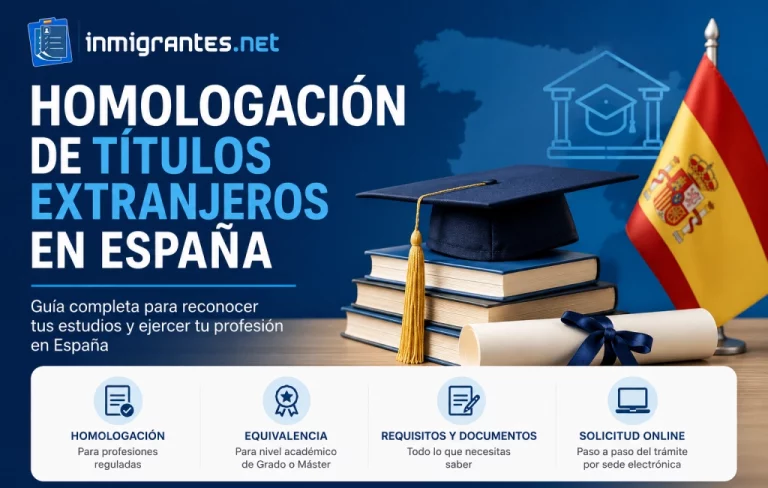
Recognition of Foreign Qualifications in Spain: Which Procedure Do You Need and How to Avoid Mistakes
Not all foreign qualifications follow the same procedure. Depending on the level of study, the profession and how you intend to use the qualification in Spain, you may need homologación, equivalence or credit transfer.
Homologación
For regulated professions
Equivalence
For academic level of Grado or Máster
Credit transfer (convalidación)
For partial or non-university studies
University fee
Form 790-107 / online payment
Quick summary
Homologación of foreign qualifications allows a qualification obtained outside Spain to be recognised when it is required to practise a regulated profession.
If the university qualification does not lead to a regulated profession, an equivalence declaration is normally requested.
For non-university or partial studies, you may need to apply for homologación or credit transfer through the education authorities.
Foreign documents may need legalisation, an apostille and an official translation.
Choosing the wrong procedure is one of the mistakes that causes the most delays.
Recognition of foreign qualifications in Spain is the procedure for officially recognising certain studies completed abroad. It is particularly important for people who want to work, continue their professional career, apply for public-sector positions, join a professional body or demonstrate their academic qualifications to a Spanish public authority.
However, before starting your application, it is important to clarify one key point: not all foreign qualifications can be homologated. Depending on the type of qualification and your objective, you may need to apply for homologación, a declaration of equivalence, validation of studies or another procedure altogether.
Key point
If you want to practise a regulated profession in Spain, such as medicine, nursing, architecture, a regulated engineering profession, teaching or another specific profession, you will probably need to check whether homologación applies. If you only need to establish the academic level of your university studies, equivalence may be the appropriate option.
What is homologación of a foreign qualification?
Homologación is the official recognition of a qualification obtained in another country when it is deemed equivalent to a Spanish qualification required to practise a regulated profession. In other words, it allows a foreign qualification to have professional effect in Spain when the law requires a specific qualification.
Recognition of foreign qualifications in Spain: requirements and how to apply
This procedure is particularly relevant to qualifications in healthcare, technical, legal and educational fields, as well as other professions with specific entry or practice requirements. In many cases, without homologación it is not possible to join a professional body, sign off on projects, apply for certain positions or legally practise a regulated profession.
Homologación, equivalence and validation: the differences
One of the most common questions concerns the difference between homologación, declaring a qualification equivalent and validating studies. Although these terms are sometimes used as if they meant the same thing, they are not exactly the same.
Procedure
Purpose
Example of use
Homologación
Recognising a foreign qualification linked to a regulated profession in Spain.
Practising a profession for which a qualifying degree is required.
Equivalence
Recognising the academic level of a foreign university qualification as equivalent to a Spanish Grado or Máster.
Establishing university-level academic standing when you do not intend to practise a regulated profession.
Validation
Recognising partial studies, individual subjects or certain non-university studies.
Continuing your studies in Spain or having specific stages of education recognised.
Choosing the right procedure from the outset is essential. Applying for homologación when equivalence is actually the correct option can cost you time and money and add months to the process.
Which foreign qualifications can be homologated in Spain?
In general, official foreign qualifications may be eligible for homologación if they were issued by a university or institution recognised in the country of origin and correspond to training comparable to that required in Spain for a regulated profession.
Some fields where homologación is particularly important include:
Healthcare
Medicine, nursing, dentistry, pharmacy, physiotherapy and other regulated healthcare professions.
Education
Qualifications related to teaching, teacher training or access to certain educational roles.
Engineering and architecture
Where the profession requires specific professional powers in Spain.
Other regulated professions
This will depend on the qualification, the course of study and the applicable regulations.
If your qualification does not correspond to a regulated profession in Spain, that does not mean it cannot be recognised: the appropriate procedure may be to obtain equivalence to the academic level of a Spanish Grado or Máster degree.
General requirements for recognition of a foreign qualification
Requirements may vary depending on the country, type of qualification and profession, but the following points are usually checked:
That the qualification is official in the country where it was obtained.
That the issuing institution is recognised by the education authorities in the country of origin.
That the course of study has been completed and the qualification has been issued or its issuance can be verified.
That the level and duration of the studies are comparable to those of the corresponding Spanish qualification.
That the documents are legalised or apostilled where necessary.
That an official translation is provided if the documents are not in Spanish.
That the relevant fee is paid for the procedure.
Practical tip: Before paying the fee and submitting your application, check whether your actual goal is to practise a regulated profession, have your academic level recognised, continue your studies or submit your qualification for an employment-related procedure. This distinction determines which procedure you need.
Documents required for recognition
The documents required may vary depending on the case, but university qualification recognition procedures usually ask for documents such as the following:
1. Identity document
DNI, NIE, passport or another document proving your identity and nationality.
2. Academic qualification
Original qualification, diploma or certificate confirming its issuance.
3. Academic transcript
A document showing the duration of the studies, subjects, credits, study hours and grades, as applicable.
4. Legalisation or apostille
This may be required for documents issued outside the European Union, European Economic Area or Switzerland.
5. Official translation
If the documents are not in Spanish, they generally need to be accompanied by an official translation.
6. Proof of payment
For university qualifications, the fee can be paid online, using Form 790-107 or by bank transfer.
If you are going to submit foreign documents in Spain, it is also a good idea to check the section on legalisation, apostilles and translations before starting the procedure. An incorrect translation or a missing apostille can hold up your application for months.
How to apply for recognition of a foreign university qualification
Applications for foreign university qualifications are submitted through the relevant government online portal. The general process can be summarised as follows:
Check whether your qualification requires homologación or equivalence recognition.
Review the official guidance and the requirements for the profession or academic level.
Prepare your qualification, academic transcript and identity documents.
Have the documents legalised or apostilled when required.
Arrange official translations if the documents are not in Spanish.
Access the government online portal and complete the application.
Pay the relevant fee or provide proof of payment, if applicable.
Submit the application and save the receipt.
Check your application status until a decision is issued.
Recommended official link
To avoid errors, always consult the Ministry’s Portal for the Recognition of Foreign University Qualifications before submitting your application: Portal Valida-TE.
Fee for homologación of a foreign qualification
A fee must be paid for university homologación and equivalence procedures. The official portal currently lists a fee of 166,50 euros for homologación applications and declarations of equivalence.
Payment can be made online, using Form 790-107 at participating banks, or by bank transfer, depending on the case. If someone else pays the fee on the applicant’s behalf, it is advisable to follow the official instructions exactly so the payment can be correctly linked to the application.
For non-university studies, the fee may vary depending on the procedure. In addition, homologación to the Spanish Compulsory Secondary Education (ESO) certificate is free of charge.
How long does homologación of a foreign qualification take?
Processing times can vary considerably depending on the qualification, country of origin, documents submitted, whether general criteria apply and the administrative workload at the time.
In practice, some applications may be decided within a few months, while others may take considerably longer, particularly if documents are missing, errors need to be corrected, technical reports are required or the qualification needs to be compared in detail with Spanish study programmes.
To reduce delays, the most important thing is to submit a complete application from the outset: correct documents, apostilles where required, official translations and qualification details exactly as they appear on the diploma.
What happens if documents are missing or there are errors?
If the authorities find that documents are missing or that a document does not meet the requirements, they may ask you to provide or correct the documentation. This means you will have to submit the missing items within the stated deadline.
The most common mistakes are:
Uploading incomplete or illegible documents.
Failing to provide an academic transcript listing subjects, credits or hours.
Failing to have documents legalised or apostilled when required.
Submitting unofficial translations.
Entering the name of the university or qualification differently from how it appears on the diploma.
Choosing homologación when equivalence recognition was required, or vice versa.
Failing to save the application or payment receipt.
A mistake to avoid
Do not start the procedure just because you “want to validate your qualification”. First, identify exactly what you need it for: practising a regulated profession, proving your academic level, studying, working for a private company, applying for a public-sector position or applying for a visa.
Recognition of non-university qualifications
Non-university studies follow a different procedure. This may include qualifications in secondary education, the Spanish Baccalaureate (Bachillerato), vocational training, arts education, sports education or other equivalent studies.
In these cases, the procedure is handled by the Ministry of Education, Vocational Training and Sports and may require an application, academic documents, legalisation or translation, and payment of the relevant fee.
This type of recognition may be necessary to continue studying in Spain, enrol in vocational training courses, prove your education level or take part in certain academic processes.
Does recognition allow you to work in Spain?
Recognition may be necessary to practise certain professions, but it does not replace other employment, administrative or immigration requirements.
For example, a foreign national may also need a residence and work authorization, registration with a professional body, proof of language proficiency, experience, professional membership or sector-specific requirements.
Recognition, equivalence and validation are not the same thing.
Scan your documents carefully
Make sure they are complete, legible and not cut off.
Do not improvise translations
If an official translation is required, a simple translation may not be accepted.
Keep your receipts
Keep the receipts for your application and payment, as well as any correspondence.
If you are preparing a citizenship or residence application, remember that recognition of your qualification does not replace other personal documents. You can also consult our guide to the documents required to apply for Spanish citizenship.
Frequently asked questions about recognition of foreign qualifications
What is the difference between recognition and equivalence?
Recognition is used when you want a foreign qualification to be recognised for a regulated profession in Spain. Equivalence recognises the academic level of a university qualification, usually a Bachelor’s or Master’s degree, when you do not intend to practise a specific regulated profession.
Where do I apply to have a foreign university qualification recognised?
Applications to have foreign university qualifications recognised are submitted through the government online portal of the ministry responsible for universities.
How much does it cost to have a foreign university qualification recognised?
The official fee for university applications for recognition and equivalence is currently 166,50 euros. Always check the current amount before paying.
Do I need to have my qualification apostilled?
It depends on the country that issued the document. Academic documents from European Union and European Economic Area countries and Switzerland are generally exempt from legalisation, but other documents may require an apostille or legalisation.
Do I need a sworn translation?
If your qualification or academic transcript is not in Spanish, you will usually need to provide an official translation. A translation prepared by the applicant is generally not sufficient.
What should I do if my profession is not listed as regulated?
If the profession is not listed as regulated, or your qualification does not correspond to a regulated profession in Spain, homologation may not be the appropriate procedure. You may need to consider applying for a declaration of equivalence instead.
Does homologation automatically guarantee a job?
No. Homologation may be required to practise a profession or have your qualification recognised, but it does not guarantee employment. Other requirements may also apply, such as work authorisation, professional registration or work experience.
Conclusion
Homologation of foreign qualifications in Spain is an important procedure for many professionals, but it is not always the right one. Before submitting an application, find out whether you need homologation, equivalence or validation; prepare your documents with an apostille and translation where required; and check the latest official instructions.
A well-prepared application can help you avoid requests for additional documents, delays and errors that unnecessarily prolong the recognition of your studies.
An authorization to stay for studies in Spain is becoming a popular option for international students who want to broaden their academic horizons. This article provides a comprehensive overview of the requirements and process for obtaining authorization to stay for studies in 2024. If you are thinking of studying in Spain, you will find all the information you need here.
Spain has become an attractive destination not only for its rich culture, but also for the quality of its universities and educational institutions. To benefit from this experience, it is essential to understand how authorization to stay for studies works.
What is authorization to stay for studies in Spain?
An authorization to stay for studies is a permit that allows foreign students to stay in Spain for more than 90 days to study at an authorized educational institution. This permit applies to those who wish to pursue undergraduate or postgraduate programmes, or even language courses.
This type of stay is essential for people who are not EU citizens and wish to study in Spain. An authorization to stay for studies not only provides the opportunity to access quality education, but also allows students to immerse themselves in Spanish culture.
In addition, authorization to stay for studies comes with several benefits, such as access to healthcare services and the possibility of working under certain conditions, which will be explained below.
What are the requirements for authorization to stay for studies in Spain?
To obtain an authorization to stay for studies in Spain, you must meet several requirements:
You must not be a citizen of the European Union.
You must have sufficient financial resources, which in 2024 amount to approximately 600 € per month.
You must have health insurance covering the entire period of stay.
You must have been admitted to an educational institution authorized by the Ministry of Education.
In addition to these basic requirements, it is important to provide additional documents, such as a criminal record certificate and the educational institution’s letter of acceptance. Having all these documents ready will make the application process easier.
How do you apply for authorization to stay for studies?
The student visa application process in Spain is a crucial step for those who wish to study in the country. You apply through the Spanish consulate or embassy in your country of origin. It is essential to submit all the required documents to avoid delays.
The first step is to complete the application form, which can usually be found on the consulate’s website. You must submit this form together with the required documents, such as your admission letter and proof of financial resources.
You must apply at least one month before the course start date, as processing times can vary. Make sure you follow all the consulate’s instructions to avoid problems later on.
Where do you submit an application for authorization to stay for studies?
The application must be submitted to the relevant Spanish embassy or consulate. In some cases, you may also be required to visit a designated application centre. We recommend checking the specific requirements of each consulate, as they may vary.
In most cases, the consulate will require you to book an appointment to submit your documents. It is therefore essential to get everything organised in advance. Make sure you bring copies of all your documents as well as the originals to make them easier to review.
Remember that processing times for the authorization may vary, so it is essential to apply well in advance.
Can I work with an authorization to stay for studies?
Yes. Students with an authorization to stay for studies can work in Spain, but certain restrictions apply. Students may work up to 20 hours per week, provided this does not interfere with their studies.
It is important to note that some types of work are prohibited, especially work that could negatively affect academic performance. Students must make sure their job does not conflict with the time they need for classes and studying.
Employers should also be aware that they are hiring an international student, as this may involve additional hiring requirements.
What are the latest changes to authorization to stay for studies in 2024?
2024 brings some changes to the rules on authorization to stay for studies that are relevant to prospective students. One of the most notable changes is the increase in the amount required to prove financial means.
In 2024, the minimum required amount is 600 € per month, an increase compared with previous years. This change aims to ensure that students have the resources they need to support themselves during their stay.
The application process has also been simplified at some consulates, which may make it easier for students to obtain their visa. It is important to keep up to date with these changes and check regularly with educational institutions and the relevant consulate.
Frequently asked questions about authorization to stay for studies in Spain
How many hours can I work on a student visa in Spain in 2024?
Students with a student visa can work up to 20 hours per week during the academic term. This limit is essential to ensure that students can balance work and study. During holiday periods, they can work full-time.
Students are advised to look for flexible jobs that fit around their class schedule. This will help them meet their academic and work commitments without difficulty.
What fee do I have to pay for authorization to stay for studies?
The fee for authorization to stay for studies varies by consulate, but is generally between 60 and 150 euros. It must be paid when you submit your application and may vary depending on the type of studies and the length of your stay.
You should contact the Spanish consulate directly for up-to-date information about the applicable fees and accepted payment methods.
How long do I have to apply for authorization to stay for studies in Spain?
Students must apply for authorization to stay for studies at least one month before their legal stay expires, or before their academic programme begins. However, we recommend starting the application process much earlier to avoid any problems.
It is essential to keep track of course start dates and make sure you meet all the requirements to avoid problems with your visa.
How many times can authorization to stay for studies in Spain be extended?
Authorization to stay for studies can be extended up to twice, provided there are valid grounds, such as continuing your studies at the same educational institution. Each extension must be requested well in advance, and you must submit the necessary documents to prove that you are continuing your studies.
It is essential to follow all the procedures established for the extension, including submitting new documents and proof of the studies completed.
This article provides a complete guide to authorization to stay for studies: complete guide 2024, covering everything from requirements to frequently asked questions, so you can prepare for your academic experience in Spain.
Finding a job can be challenging, especially if you are unemployed. Fortunately, Madrid offers a range of free courses for unemployed people that are an excellent opportunity to improve your skills and increase your chances of finding work.
If you live in Madrid and are looking for high-quality training at no cost, this article will guide you through the benefits, available courses, enrolment process, eligibility requirements and job opportunities that may arise after successfully completing these free courses in Madrid for unemployed people.
What are the benefits of free courses for unemployed people in Madrid?
Free courses offer a number of advantages for people looking to improve their employment prospects:
Developing skills and abilities relevant to today's labour market.
The opportunity to earn recognised professional certificates.
The chance to undertake work placements in companies and gain practical experience in your field of interest.
Promoting employment inclusion and personal development.
Acquiring essential digital skills in the era of digital transformation.
What free courses does SEPE offer in Madrid?
SEPE, together with organisations such as ADAMS Formación and Grupo Aspasia, offers a wide range of courses covering everything from technical subjects to soft skills:
Some examples include:
Administration and management courses.
Digital skills training.
Courses in healthcare and social care.
Programmes focused on renewable energy and the environment.
How can I enrol in free courses for unemployed people in Madrid?
To enrol, follow these steps:
Check that you meet the requirements for accessing free courses in Madrid.
Choose a course that interests you, offered by the SEPE or one of its partner organisations.
Complete the enrolment process, which can usually be done online or in person at the relevant offices.
What are the requirements for accessing free courses in Madrid?
Specific requirements may vary, but generally include:
Being registered as a jobseeker in the Community of Madrid.
Having the educational level required for the specific course.
Not being enrolled in another subsidised training activity.
What job opportunities are available after completing free courses?
After completing a free course, you may have a range of promising job opportunities, from positions directly related to your training to new prospects in related fields or the possibility of starting your own business.
How are free courses adapted to the needs of the labour market?
These courses are designed to be highly relevant to the current employment landscape, so they:
Are updated frequently to reflect changes and new market trends.
Include training modules in soft skills such as leadership and communication.
Focus on high-demand sectors with growth prospects.
Related questions about free vocational training courses
How can I access free SEPE courses?
To access SEPE courses:
Simply visit the official SEPE website or the website of a partner organisation such as the Community of Madrid and look for the training section. There you will find the updated catalogue of courses available to unemployed people.
How much are you paid to take an INEM course?
Courses organised by INEM, now known as SEPE courses, do not usually include payment. However, certain types of assistance may be available, such as travel subsidies or grants for people in specific circumstances.
How many free SEPE courses can I take?
There is no exact limit on the number of courses you can take. However, it is important to manage your time and make sure you can meet the requirements of each course.
What courses can I take while unemployed?
While unemployed, you can take any course that suits your profile and career goals, including those focused on free vocational training and certificates of professional competence.
Finally, to complement the information provided, we invite you to watch this video for advice on how to choose the best course for you:
We hope this guide helps you take the next step in your career and make the most of the job opportunities available after free courses in Madrid. Best of luck!